
“You are what you eat.”
Turns out, this old saying applies to your skin too.
What you put in your body shows up on your face. That greasy pizza? Those sugary desserts? Your skin notices. On the flip side, nutrient-rich foods can literally transform your complexion from dull and acne-prone to clear and glowing.
Let’s talk about the skin-diet connection—and which foods to eat more (or less) of.
Does Diet Really Affect Your Skin?
Short answer: Yes.
Your skin is your body’s largest organ. It reflects your internal health. Poor nutrition shows up as:
- Acne and breakouts
- Dull, tired-looking skin
- Premature aging
- Inflammation and redness
- Slow healing
Good nutrition shows up as:
- Clear, smooth skin
- Natural glow
- Reduced inflammation
- Faster healing
- Slower aging
Foods That Cause Acne
Let’s start with the bad news. These foods are linked to breakouts:
1. Dairy Products
Why they’re problematic:
Milk contains hormones (from pregnant cows) that can trigger oil production and inflammation. Whey protein in milk may also spike insulin, leading to breakouts.
What the research says:
Studies show people who consume more dairy have higher acne rates.
Worst offenders:
- Milk (especially skim milk)
- Cheese
- Ice cream
- Whey protein shakes
Try instead: Almond milk, oat milk, coconut yogurt
2. High-Glycemic Foods
Why they’re problematic:
They spike blood sugar and insulin, which triggers inflammation and excess oil production.
Examples:
- White bread, white rice
- Sugary cereals
- Pastries and cakes
- Candy and sweets
- Soft drinks
- French fries
Try instead: Whole grains, quinoa, oats, sweet potatoes
3. Processed Foods
Why they’re problematic:
Loaded with unhealthy oils, preservatives, and additives that promote inflammation.
Examples:
- Fast food
- Packaged snacks (chips, cookies)
- Instant noodles
- Processed meats
Try instead: Whole, unprocessed foods
4. Excessive Caffeine
Why it’s problematic:
Can spike cortisol (stress hormone), which triggers oil production and breakouts. Also dehydrates skin.
Note: Moderate coffee (1-2 cups) is usually fine. It’s the 5+ cups daily that cause issues.
Try instead: Green tea (antioxidants!), herbal tea
5. Alcohol
Why it’s problematic:
Dehydrates skin, causes inflammation, disrupts hormone balance, dilates pores.
The damage:
- Dull, dry skin
- Breakouts
- Premature aging
- Redness
Try instead: Mocktails, sparkling water with fruit
Foods That Fight Acne and Inflammation
Now for the good stuff! Eat more of these:
1. Omega-3 Fatty Acids
Why they’re amazing:
Powerful anti-inflammatory. Reduces acne, redness, and overall skin inflammation.
Best sources:
- Salmon, sardines, mackerel
- Walnuts
- Flaxseeds, chia seeds
- Avocados
Goal: 2-3 servings per week
2. Antioxidant-Rich Foods
Why they’re amazing:
Fight free radicals (which cause aging and damage). Protect skin from pollution and UV.
Best sources:
- Berries (blueberries, strawberries)
- Dark chocolate (70%+ cacao)
- Green tea
- Spinach, kale
- Tomatoes
3. Vitamin C Foods
Why they’re amazing:
Boosts collagen production, brightens skin, fades dark spots, protects from sun damage.
Best sources:
- Oranges, lemons
- Bell peppers (red, yellow)
- Strawberries, kiwi
- Broccoli
- Guava, papaya
Goal: Daily intake
4. Vitamin E Foods
Why they’re amazing:
Protects skin from oxidative stress, supports barrier function, anti-aging.
Best sources:
- Almonds, sunflower seeds
- Spinach
- Avocados
- Olive oil
5. Zinc-Rich Foods
Why they’re amazing:
Regulates oil production, reduces inflammation, supports healing. Essential for acne-prone skin.
Best sources:
- Pumpkin seeds
- Chickpeas, lentils
- Cashews
- Yogurt (if you tolerate dairy)
- Eggs
6. Probiotics
Why they’re amazing:
Gut health = skin health. Probiotics reduce inflammation and support immune function.
Best sources:
- Yogurt (dairy-free options work too)
- Kefir
- Kimchi, sauerkraut
- Miso, tempeh
7. Water!
Why it’s amazing:
Hydration is crucial for plump, glowing skin. Flushes toxins, delivers nutrients.
Goal: 2-3 liters daily
Anti-Aging Foods
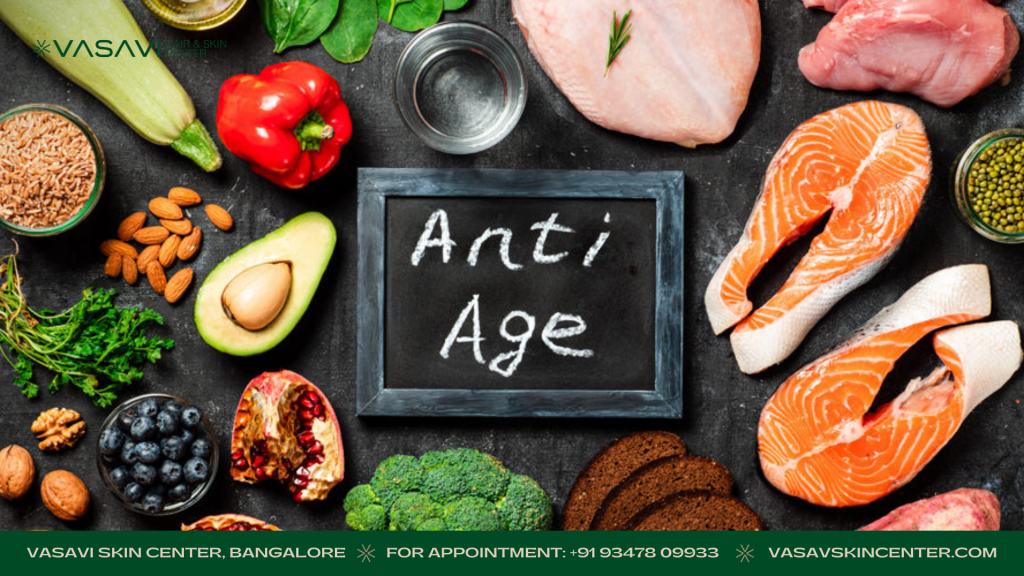
Want to slow down aging? Eat these:
Collagen-Boosting:
- Bone broth
- Citrus fruits (vitamin C)
- Leafy greens
- Egg whites
Antioxidant Powerhouses:
- Berries
- Green tea
- Dark chocolate
- Colorful vegetables
Healthy Fats:
- Avocados
- Olive oil
- Nuts and seeds
- Fatty fish
Foods for Specific Skin Concerns
For Acne:
Omega-3s, zinc, probiotics, low-glycemic foods
For Dry Skin:
Healthy fats (avocado, nuts), water, vitamin E
For Dull Skin:
Vitamin C, antioxidants, hydration
For Pigmentation:
Vitamin C, vitamin E, lycopene (tomatoes)
For Eczema/Inflammation:
Omega-3s, probiotics, anti-inflammatory foods
Sample Skin-Healthy Meal Plan
Breakfast:
- Oatmeal with berries, walnuts, chia seeds
- Green tea
Mid-Morning Snack:
- Apple with almond butter
Lunch:
- Grilled salmon
- Quinoa
- Large mixed salad with olive oil dressing
Afternoon Snack:
- Carrot sticks with hummus
Dinner:
- Stir-fried vegetables with tofu
- Brown rice
- Side of sauerkraut
Evening:
- Chamomile tea
Hydration:
2-3 liters of water throughout the day
Supplements for Skin
While whole foods are best, some supplements can help:
Omega-3 Fish Oil
If you don’t eat fish regularly
Probiotics
For gut and skin health
Vitamin D
Many people are deficient (affects skin healing)
Zinc
If acne-prone and diet lacks zinc
Collagen Peptides
May support skin elasticity (research is mixed)
Always consult a doctor before starting supplements.
The Gut-Skin Connection
Your gut and skin are closely linked. Poor gut health leads to:
- Inflammation
- Acne
- Eczema
- Psoriasis flare-ups
How to support gut health:
- Eat probiotic foods
- Include fiber (fruits, vegetables, whole grains)
- Avoid processed foods
- Manage stress
- Stay hydrated
Does Chocolate Really Cause Acne?
The truth: Dark chocolate (70%+ cacao) with minimal sugar is actually good for skin (antioxidants!).
Milk chocolate loaded with sugar? That can trigger breakouts.
It’s not the cocoa—it’s the sugar and dairy.
Debunking Diet Myths
Myth: Greasy foods cause oily skin
Truth: Not directly. But unhealthy fats promote inflammation.
Myth: Drinking more water will cure all skin issues
Truth: Hydration helps, but it won’t cure acne or erase wrinkles.
Myth: You need expensive superfoods
Truth: Regular fruits, vegetables, and whole foods work just fine.
Myth: Detox juices cleanse your skin
Truth: Your liver and kidneys detox your body. Eat balanced meals instead.
Lifestyle Factors That Work With Diet
Sleep:
7-9 hours nightly for skin repair
Exercise:
Boosts circulation, delivers nutrients to skin
Stress Management:
Chronic stress worsens acne, aging, and inflammation
Skincare Routine:
Diet + proper skincare = best results
Sun Protection:
Eat antioxidants AND wear SPF 50+
How Long Before You See Changes?
Realistic timeline:
- Weeks 1-2: Reduced bloating, better digestion
- Weeks 3-4: Less inflammation, fewer new breakouts
- Weeks 6-8: Clearer skin, more glow
- 3+ months: Significant improvement in texture, tone, acne
Diet changes aren’t overnight magic. But they work.
When Diet Alone Isn’t Enough
Sometimes, you’re eating perfectly but still breaking out. Why?
Possible reasons:
- Hormonal acne (needs medical treatment)
- Genetic predisposition
- Underlying medical conditions
- Improper skincare routine
When to see a dermatologist:
- Severe acne despite diet changes
- Cystic acne
- Scarring
- Persistent pigmentation
- Skin conditions (eczema, psoriasis, rosacea)
Diet helps, but professional treatment may be needed.
Ready to Glow from Within?
You can’t out-eat a bad skincare routine, and you can’t out-skincare a bad diet. The best results come from both. Book Your Skin & Nutrition Consultation
Frequently Asked Questions
Will cutting out dairy clear my acne?
It helps many people, but not everyone. Try eliminating it for 4-6 weeks and see.
How much water should I drink?
2-3 liters daily is a good goal.
Can I eat chocolate?
Dark chocolate (70%+) is fine. Milk chocolate with lots of sugar may cause breakouts.
Do I need supplements for good skin?
Not necessarily. Whole foods provide most nutrients. Supplements can fill gaps.
How long until diet changes improve my skin?
6-8 weeks for noticeable improvements.
Should I avoid all sugar?
Minimize added sugars. Natural sugars in fruit are fine.