

Published on vasaviskincenter.com | Written for patients in Bangalore | Reviewed by Dr. Ch. Sree Vasavi (add before publishing)
Many people notice more hair on the pillow or in the bathroom drain once the weather turns cooler. Bangalore winters are mild compared to north India, but the early morning chill, dry air and cold showers can still change how your scalp behaves. If your hair seems to be falling more than usual, it helps to know what is normal and what is worth getting checked.
Is some hair fall in winter normal?
Yes, losing around 50 to 100 hairs a day is considered normal, and many people feel the shedding goes up a little with seasonal changes. Dry winter air can also pull moisture out of the scalp, which leaves it tight, flaky and itchy. A dry, irritated scalp does not hold hair as comfortably, and scratching makes it worse.
That said, seasonal shedding should settle down on its own. If it carries on for weeks, or you see thinning or bald patches, the cause may be something other than the weather.

5 simple things you can do at home
1. Cover your hair when you go out early in the morning. Cold, dry air takes away natural oils from the scalp. A soft satin or silk scarf is gentler than rough cotton or wool and causes less friction on the hair.
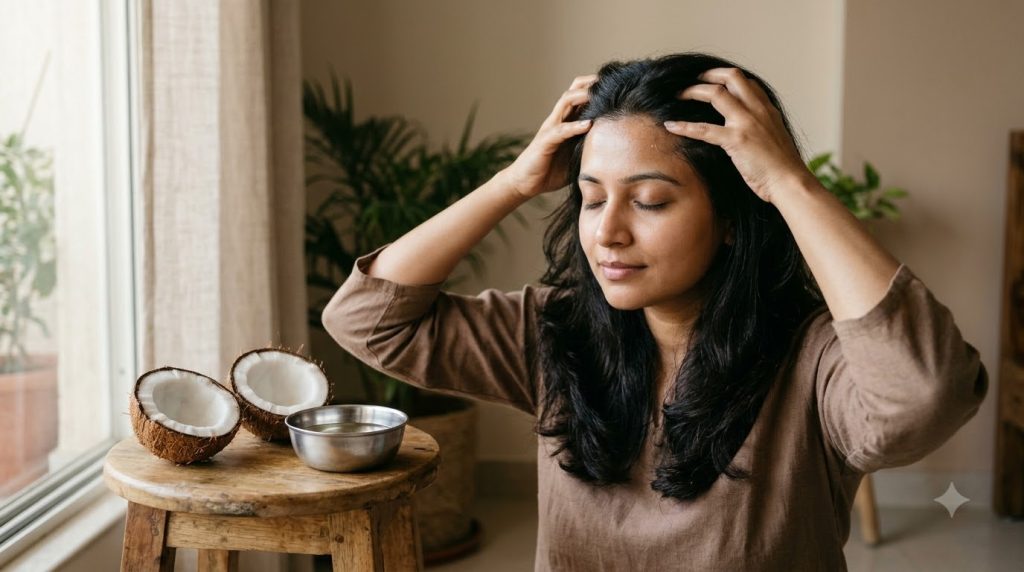
2. Massage your scalp regularly. Five minutes of gentle massage with your fingertips each day is enough. If you like oil, a warm coconut, olive or almond oil massage once or twice a week is fine. Massage feels relaxing and may help the scalp feel less tight, though it is not a treatment for hair loss on its own. Do not massage hard, and avoid oiling if your scalp is already very itchy or has dandruff, as it can make flaking worse for some people.
3. Wash gently and not too often. Rinse the scalp two to three times a week with lukewarm water instead of hot. Use a mild shampoo and follow it with a conditioner or hair mask on the lengths. Ingredients such as glycerin, ceramides and argan oil are generally gentle and moisturising. Very hot water and daily showers strip the scalp further, so try to avoid both.
4. Go easy on heat. Blow dryers, straighteners and curling tools dry out the hair shaft and make it break. In winter, let your hair air dry whenever you can. If you must use heat, keep it on a low setting and use it sparingly.
5. Eat well and drink enough water. Hair needs regular nutrition. Include dal, eggs, paneer, sprouts, nuts, leafy vegetables and fruits in your meals, and drink water through the day even when you do not feel thirsty in the cold. Please do not start hair supplements on your own. If you suspect a deficiency, a simple blood test and a doctor’s advice are the safer route.
When should you see a dermatologist?
It is a good idea to book a consultation if you notice any of these:
Hair fall that continues for more than two to three months, or suddenly becomes much heavier. Visible thinning at the parting or crown, or a receding hairline. Round patches with little or no hair. A scalp that stays itchy, red, scaly or painful. Hair fall after a major illness, stress, childbirth or a crash diet.
There are many reasons for hair loss, including dandruff, nutritional gaps, thyroid problems, hormonal changes and genetics, and the right treatment depends on the cause. A proper examination of your scalp and hair is the only way to know which one applies to you.
Hair care at Vasavi Hair & Skin Center
At our clinic in Bangalore, Dr. Ch. Sree Vasavi assesses your scalp and hair history first, then suggests a plan that suits you. You can read more about our hair treatments or learn about dandruff and scalp care. If you would like to know more about the doctor, visit the about Dr. Sree Vasavi page. To get your hair checked, you can book an appointment with us.

Common questions
Does cold weather really cause hair loss? Cold and dry air can dry out the scalp and may add to seasonal shedding for some people, but it is rarely the only reason for ongoing hair fall.
Is oiling hair good in winter? A light oil massage once or twice a week is fine for most people. If you have dandruff or an itchy scalp, check with a doctor before oiling.
How often should I wash my hair in winter? Two to three times a week with lukewarm water and a mild shampoo suits many people. Your ideal frequency depends on your scalp type.
Can I stop hair fall completely with these tips? These habits support scalp health, but results differ from person to person. If the problem continues, an assessment is needed.
This article is for general information and does not replace a medical consultation. Treatment depends on individual assessment.
