
Many parents notice thin lines on their child’s back or thighs and start to worry that something is wrong. In most cases, nothing is. Stretch marks are very common during the growing years, and seeing them does not mean your child’s skin is unhealthy.
What exactly are stretch marks?
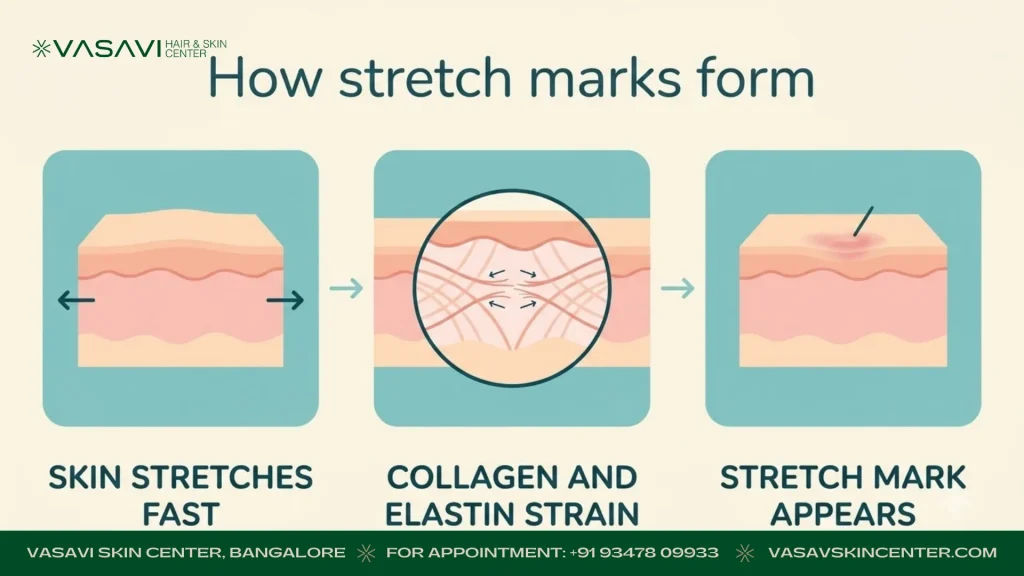
Skin is made to stretch, but only up to a point. Collagen and elastin are the fibres that keep skin firm and springy. When the skin expands faster than these fibres can keep up, they get damaged, and a thin line or streak is left behind. That line is what we call a stretch mark.
Why do they appear during puberty?
Puberty brings sudden growth. A child can shoot up in height within a few months, and the body also changes shape around the hips, thighs, chest and back. The skin often cannot adjust at the same speed. Hormonal changes during these years can add to it.
Quick weight gain, or any big change in weight, can have the same effect. So a child who has grown tall and also put on weight in the same year may notice marks sooner than others.
Where do you usually see them?
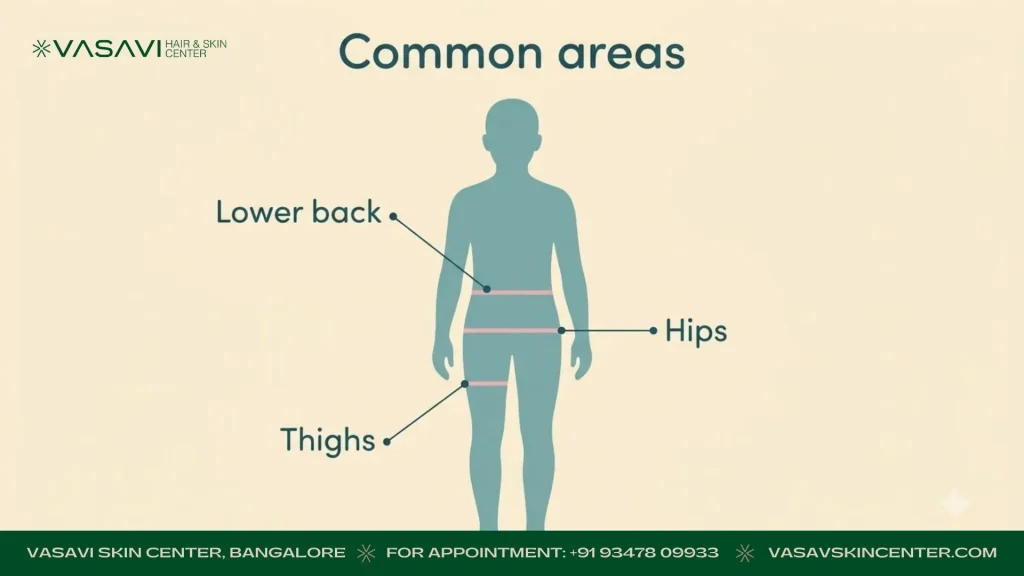
Stretch marks usually form across the direction in which the skin is being pulled. That is why many children have horizontal lines across the lower back. The thighs and hips are also common places. Some children get them on the buttocks, upper arms or calves too.
How they look, and how they change
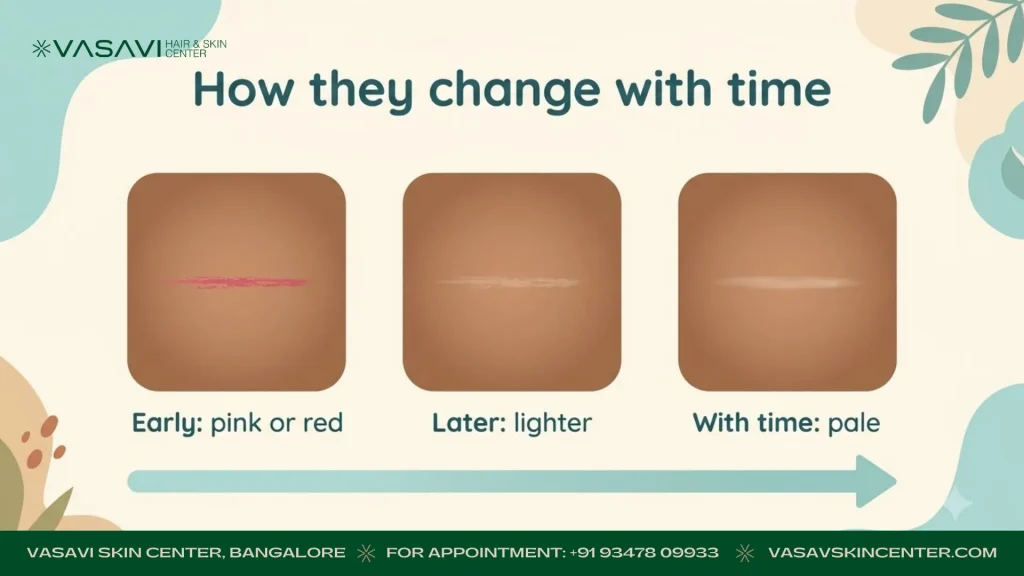
When they first appear, stretch marks are often pink or red, and some children feel mild itching in that area. With time, the colour fades. The marks become lighter and paler, and they blend more with the rest of the skin. This change can take months to years, and it is different for every child.
So yes, they can look worrying in the beginning, but they are quite common in the growth phase.
What parents can do at home
The first thing is to be calm about it. Teenagers can feel very conscious about their body, and a casual comment from a family member can hurt more than the mark itself. Let your child know this is common and that many of their friends probably have them too.
Keeping the skin moisturised can make it more comfortable and reduce itching. Please do not expect any cream to fully prevent stretch marks, though. Scratching should be avoided as far as possible.
One important point: do not apply steroid creams on your own, even if a neighbour or a chemist suggests one. Steroid creams used without medical advice can thin the skin and can actually cause stretch marks. Healthy, gradual weight management is better than crash diets, which cause sudden weight changes.
When should you see a dermatologist?
It is a good idea to get your child’s skin checked if the marks are many, appear very suddenly, are painful or very itchy, or come along with other changes that worry you. You should also come if your child is upset or losing confidence because of them. That alone is a good enough reason.
At Vasavi Hair & Skin Center in Bangalore, Dr. Ch. Sree Vasavi sees patients by appointment. Treatment for stretch marks depends on the person’s age, skin type and how old the marks are. In children and teens, any treatment is decided only after a proper examination and a discussion with the parents. In general, marks that are still pink or red are easier to improve than old, pale ones, but results vary from person to person. You can read more about the stretch marks treatment options at our clinic.
If you would like your child’s skin to be examined, you can book an appointment or contact the clinic with your questions. For more simple skin and hair advice, have a look at our Beauty Insights section.
