
A few red bumps on the cheek, rough dots on the forehead, tiny white spots near the eyes. Most of us call all of these acne and reach for whatever pimple cream is lying at home. But many of these bumps are not acne at all, and treating them like acne can sometimes make them worse.
A common story in dermatology clinics goes like this: someone has been using acne products for months, nothing changes, and the skin actually looks more irritated than before. When the skin is examined properly, the problem turns out to be something else. Let us look at the conditions that fool people the most.
First, what real acne looks like
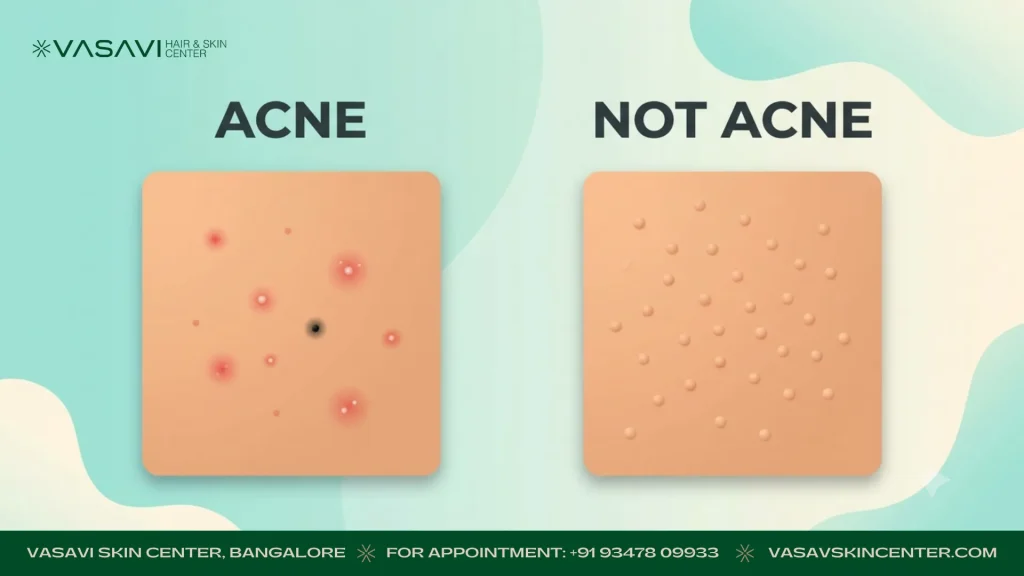
Acne starts when pores get blocked with oil and dead skin. You usually see a mix of blackheads, whiteheads and red, sometimes painful pimples, mostly on the face, upper back and chest. It is common in teenagers and young adults, but it can show up at any age. If your bumps do not fit this picture, it is worth looking at the other possibilities.
Fungal acne (Malassezia folliculitis)
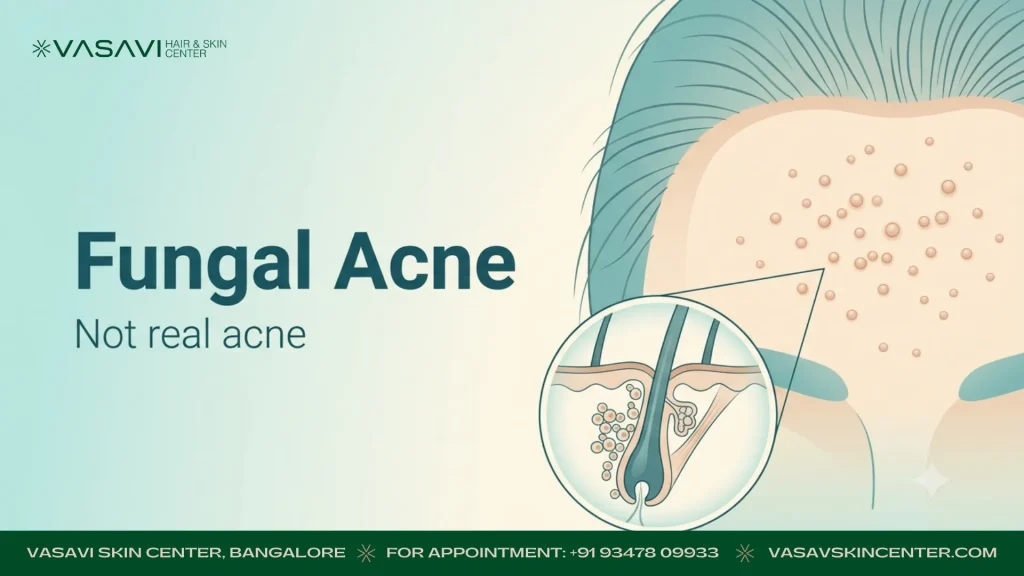
The name is misleading, because this is not acne. It happens when a yeast that normally lives on the skin grows too much inside the hair follicles. The bumps are small, look very similar to each other, and are often itchy. The forehead, hairline, chest and upper back are the usual places. Sweating, tight clothes, helmets and humid weather can make it worse.
The tricky part is that regular acne treatment does not help, and some antibiotics used for acne can actually make fungal folliculitis worse. It needs an antifungal approach, and that should be decided by a doctor after examining the skin.
Milia
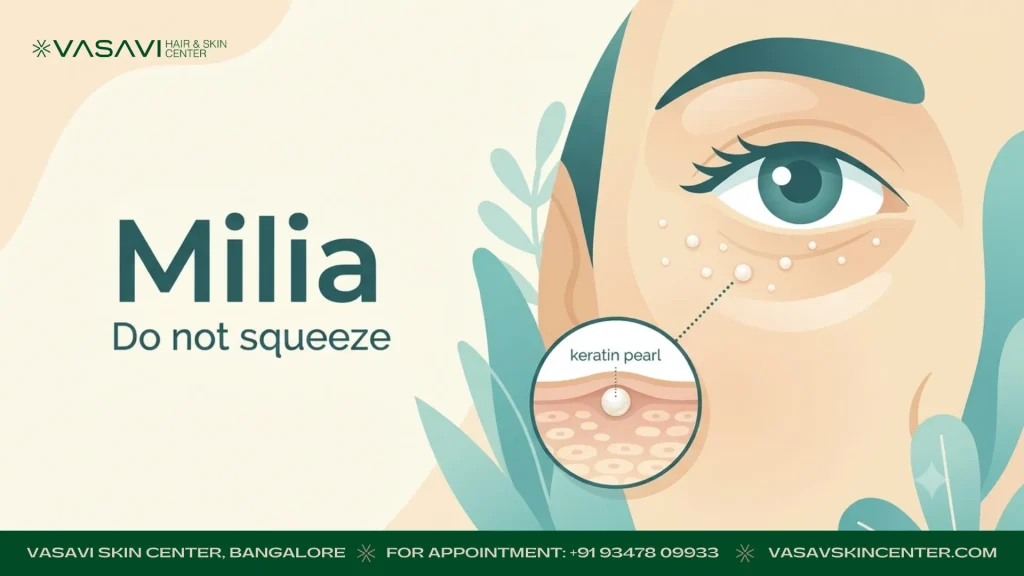
Milia are tiny, firm, pearl-white bumps, usually around the eyes, cheeks and nose. They form when keratin, a protein in the skin, gets trapped just under the surface. There is no redness, no pain and no pus, which is the main difference from a whitehead.
Please do not squeeze or scratch them with a needle at home. They do not have an opening like a pimple, so picking only damages the skin and can leave marks. Some milia settle on their own, and if they bother you, a doctor can remove them safely with proper sterile technique.
Sebaceous hyperplasia
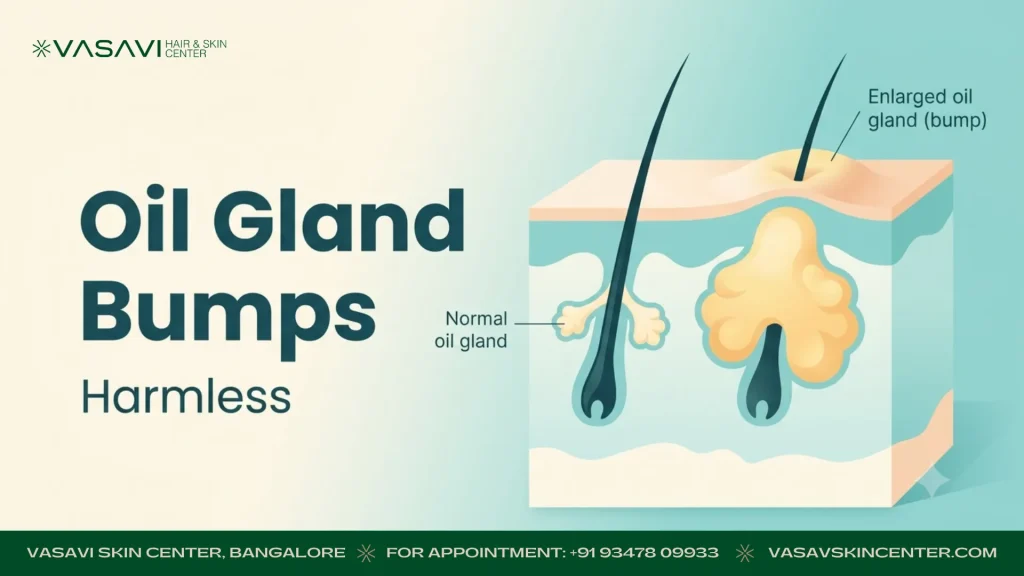
These are small, soft bumps that look skin-coloured or slightly yellow, often with a tiny dip in the centre. They appear mostly on the forehead and cheeks, and more commonly in adults than in teenagers. The oil glands are enlarged, but this is a harmless condition.
Because it is not a blocked pore, pimple creams will not make these bumps go away. If they bother you from a cosmetic point of view, there are clinic-based options a dermatologist can discuss after seeing your skin.
Keratosis pilaris
This shows up as rough, sandpaper-like bumps on the upper arms and thighs, and sometimes on the cheeks. Dead skin builds up and plugs the hair follicles. It is not an infection and it is not contagious. It often runs in families, and dry skin tends to make it look worse.
A good moisturiser used regularly helps many people. If it bothers you, a dermatologist can suggest gentle ingredients that suit your skin type, so you do not end up scrubbing the area and irritating it further.
Perioral dermatitis
Small red bumps clustered around the mouth, chin and sides of the nose, sometimes with a little scaling and a burning or tight feeling. It is easy to mistake for acne.
One well-known trigger is applying steroid-containing creams on the face, which many people do for rashes or even for dark marks. Heavy creams can also play a role. If you have been using any such cream on your face, tell your doctor, and please do not stop or restart a prescribed medicine on your own.
Rosacea
Rosacea causes persistent redness in the centre of the face, flushing, and sometimes small red bumps or pimple-like spots. The giveaway is that there are usually no blackheads. It is more common in adults, and sun, hot drinks, spicy food, alcohol, stress and some skin products can set off flare-ups.
It is a long-term condition that is managed rather than cleared once and forgotten, and the right plan differs from person to person. Using acne treatments on rosacea skin often leads to more redness and stinging.
How do you tell the difference?
Honestly, it is difficult to be sure by looking in the mirror, and even photos can mislead. A few clues can make you suspect it is not acne: the bumps are all the same size, they itch, there are no blackheads, they sit in an unusual place, or they have not improved with acne treatment. A dermatologist examines the skin closely and, when needed, may do a simple test to confirm what is going on.
When wrong treatment backfires
Harsh scrubs, too many active products at once, repeated pimple creams and picking can all irritate the skin. Inflamed skin can leave dark marks or even scars behind. If you are already dealing with marks after a breakout, you can read about our pigmentation treatments or acne scar treatment. For an overview of everything we offer for the skin, see our skin care treatments page.
When to see a dermatologist
It is a good idea to get your skin checked if the bumps have not settled in a few weeks, keep coming back, itch or hurt, are spreading, or started after using a new cream. The same goes if they are leaving marks or affecting your confidence.
You can meet Dr. Ch. Sree Vasavi at Vasavi Hair & Skin Center in Thanisandra, Bengaluru. Consultations are by appointment, and you can book an appointment online or reach us through the contact page. You may also like the other articles under Beauty Insights.
Frequently asked questions
How can I tell if a bump is acne or something else?
Not always easy at home. Blackheads, whiteheads and painful red pimples point towards acne, while itchy, uniform bumps, tiny white firm dots, or redness with flushing suggest something else. A skin examination gives a clear answer.
Can I use my acne cream on these bumps?
It is better not to. Some of these conditions do not respond to acne products, and a few can get worse. It is safer to get the bumps looked at first.
Can I pop milia like a pimple?
No. Milia have no opening, so squeezing only hurts the skin and may cause marks or infection. If they bother you, a doctor can remove them properly.
Will these bumps go away on their own?
Some do, and some keep coming back or slowly increase. If there is no improvement over a few weeks, or the skin is itchy, painful or spreading, please see a dermatologist.
This article is for general information and is not a diagnosis. Treatment depends on a proper assessment of your skin.
