
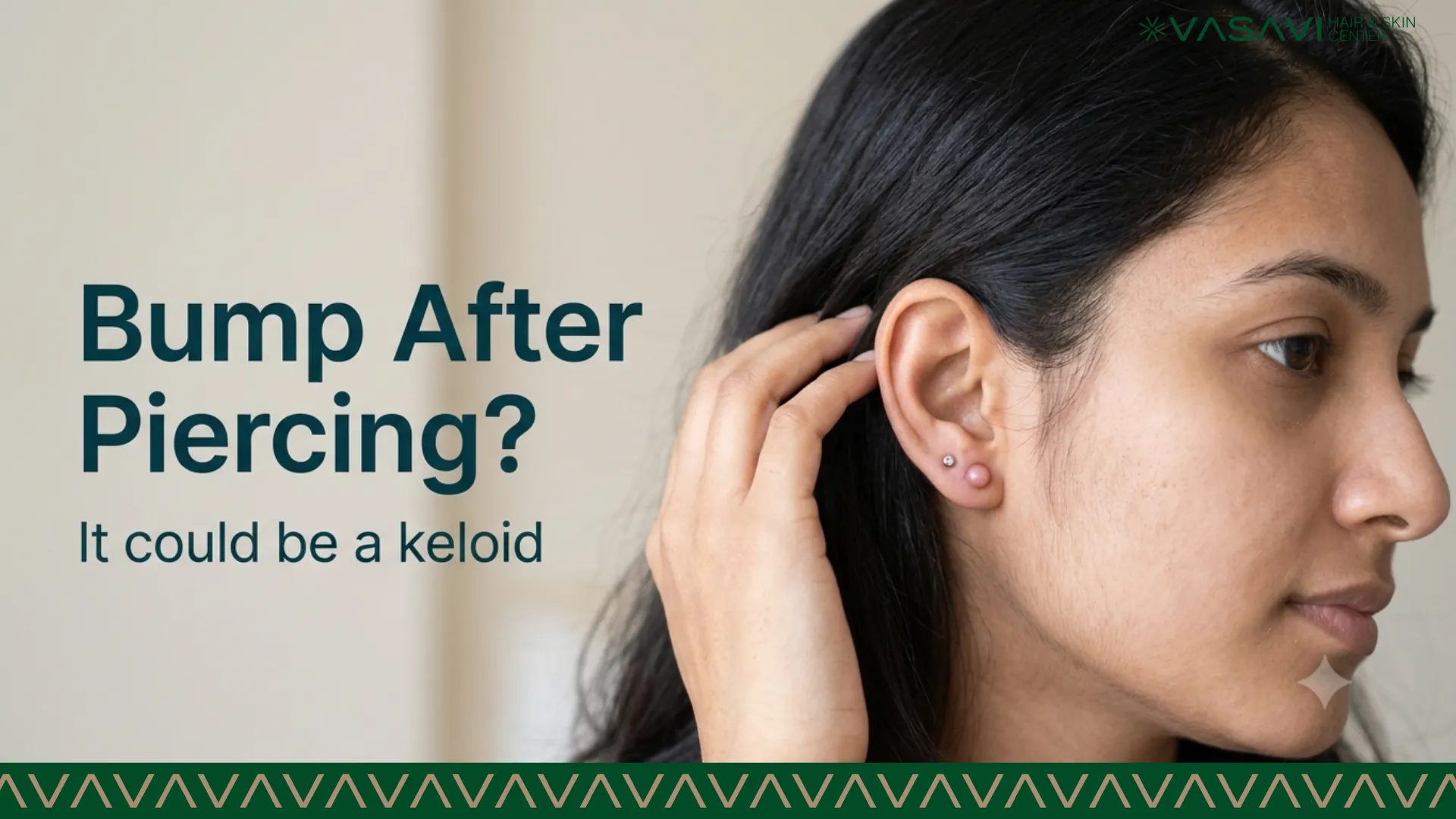
You get your ear or nose pierced, it seems to heal, and then you notice a small bump at the same spot. Many people wait to see if it goes away. If the bump is firm and slowly growing, please get it checked while it is still small.
One possible reason is a keloid.
What is a keloid?
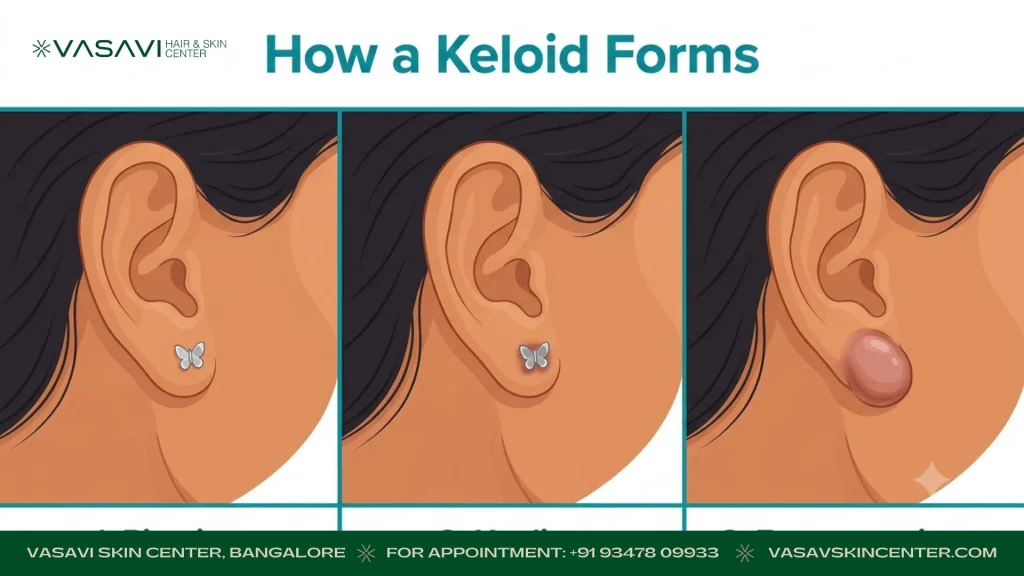
A keloid is a type of abnormal scar. When the skin is injured, it makes scar tissue to repair itself. In some people, the skin produces too much of it. The scar then grows beyond the area of the original injury, which here is the piercing.
It may look like a firm, raised and smooth bump. It can be pink, red, or darker than the skin around it. Some people feel itching or tenderness. A keloid may also appear months after the piercing, so a delayed bump should not be ignored.
Is every piercing bump a keloid?
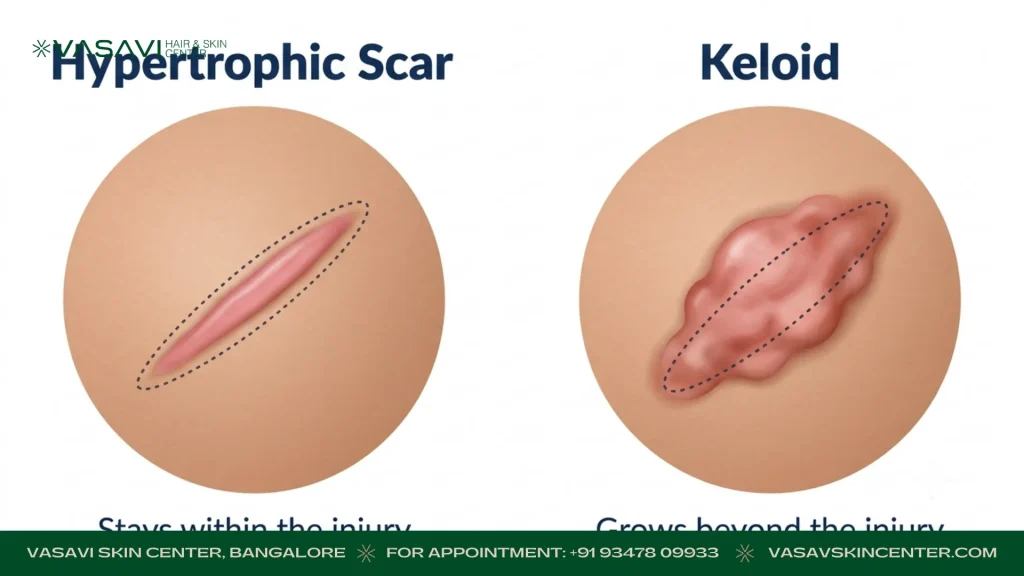
No. A bump near a piercing can also be due to irritation, infection, an allergy to jewellery, or another type of raised scar called a hypertrophic scar. A hypertrophic scar usually stays within the area of the injury, while a keloid spreads beyond it.
These can look similar in the early stage, so a skin examination is important. If the area is painful, hot, swollen or has pus, see a doctor promptly.
Who is more likely to get a keloid?
Anyone can develop one, but the chance is higher if you have had a keloid before or if it runs in your family. If this applies to you, speak to a dermatologist before any new piercing or planned skin procedure.
Why early treatment helps
Treatment generally works better when a keloid is new. A small keloid is often easier to manage than one that has been growing for a long time.
How is a keloid treated?
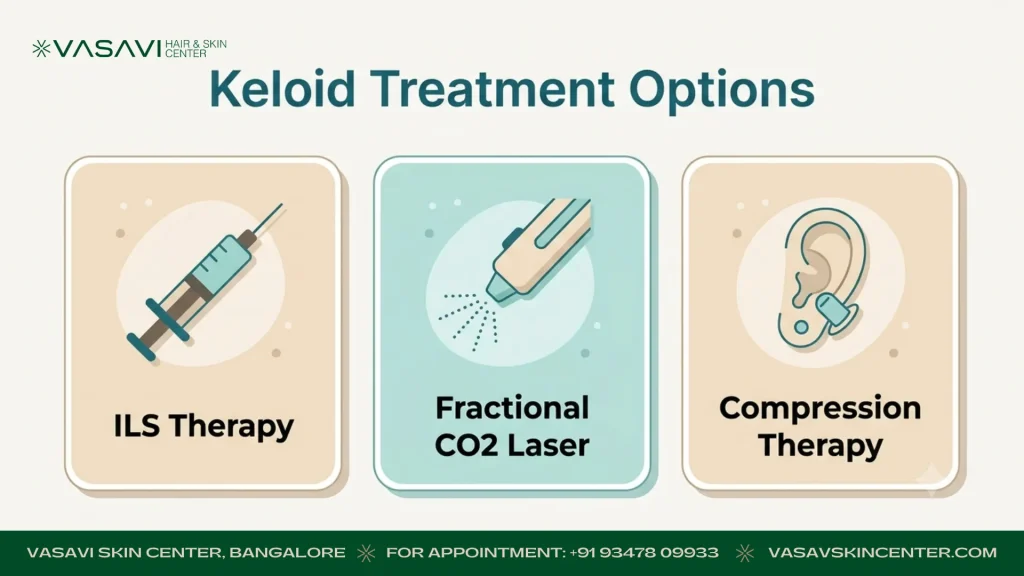
The plan depends on the size, location and age of the keloid, your skin type and any earlier treatment. Dermatologists often combine more than one method.
- Intralesional steroid (ILS) therapy: Medicine is injected into the keloid by a doctor to help soften and flatten it. More than one session is usually needed.
- Fractional CO2 laser: This may be advised in selected cases, usually along with other treatment, to help improve the thickness or texture of the scar.
- Compression therapy: Steady pressure on the area, such as with a pressure earring or dressing, may be advised. It is often used to lower the chance of regrowth after a procedure.
Each treatment can have side effects, which your dermatologist will explain beforehand. Keloids can also come back after treatment, so follow-up visits matter.
What you should avoid
Do not cut, squeeze, burn or tie off the bump at home. Any new injury can make the scar worse. Please do not apply or inject steroid medicines on your own. It is also best to avoid another piercing until a dermatologist has advised you.
If your earlobe is torn or stretched, that is a different concern. You can read about earlobe repair, and do tell the doctor if you have ever had a keloid.

When to see a dermatologist
Book a visit if a bump or scar is growing, spreading beyond the piercing or injury, itching, painful, or returning after earlier treatment.
At Vasavi Hair & Skin Center in Thanisandra, Bengaluru, you can consult Dr. Ch. Sree Vasavi to understand what the bump is and which options may suit you. You can book an appointment, contact the clinic, or see our other skin care treatments.
Frequently asked questions
Can a keloid go away on its own?
Keloids usually do not go away on their own. Get the bump examined to confirm what it is.
Can a keloid come back after treatment?
Yes, it can. This is why your dermatologist may suggest combined treatment and regular follow-up.
Can I get another piercing if I have had a keloid?
There is a risk of forming another keloid, so it is generally safer to avoid it. Discuss this with your dermatologist first.
This article is for general education and does not replace a consultation with a doctor.
