
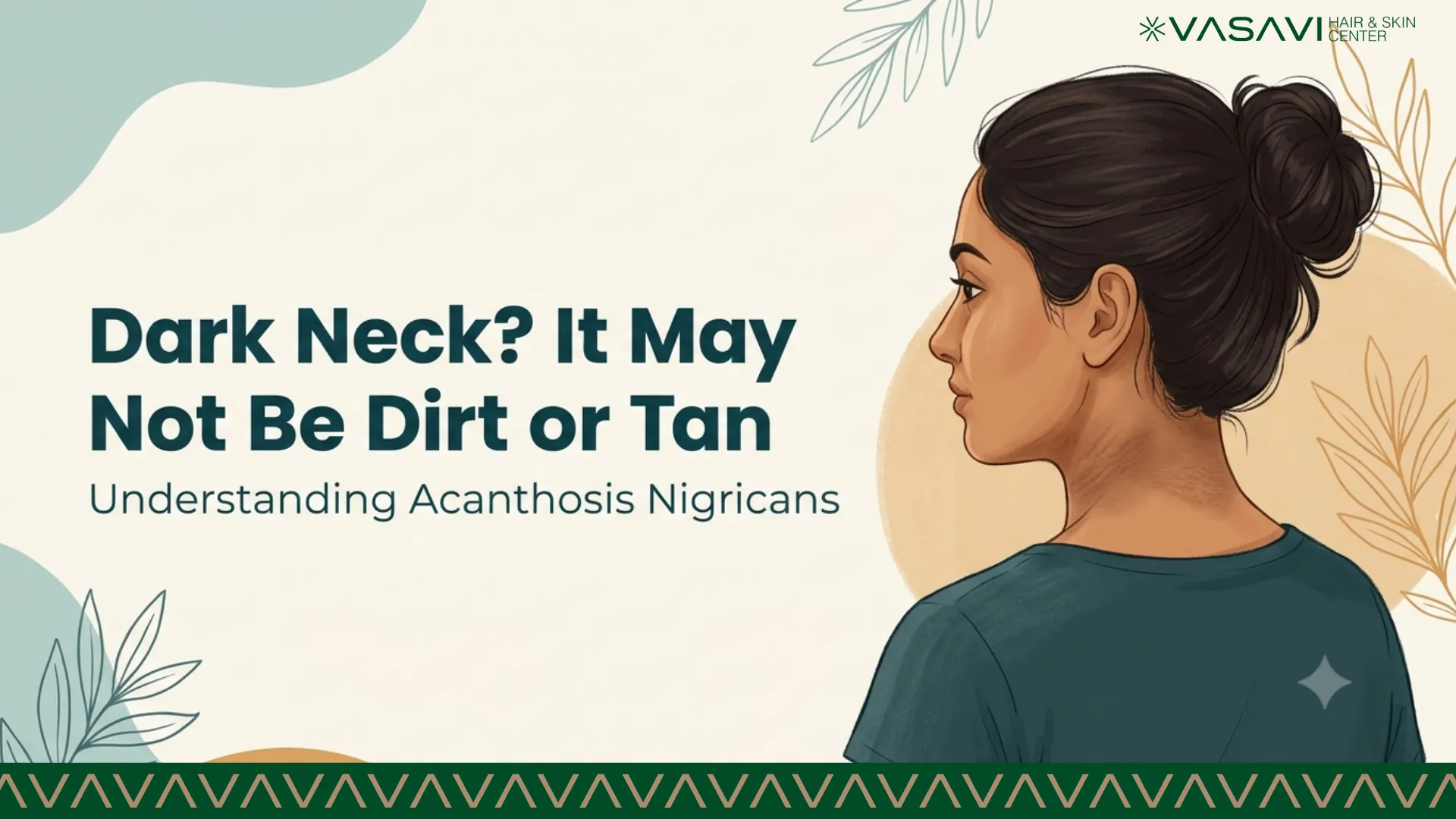
A dark patch on the neck often gets treated like a cleaning problem. People scrub harder, try one home remedy after another, or assume it is a tan that will fade. If the patch is due to acanthosis nigricans, scrubbing will not remove it. Rubbing too hard can also irritate the skin.
Acanthosis nigricans is very often linked to insulin resistance. This means your body does not respond to insulin as well as it should. The change you see on the skin can be a sign that something inside needs to be checked.
What does acanthosis nigricans look like?
The skin looks darker than the surrounding area. It also becomes thicker and may feel soft and velvety.
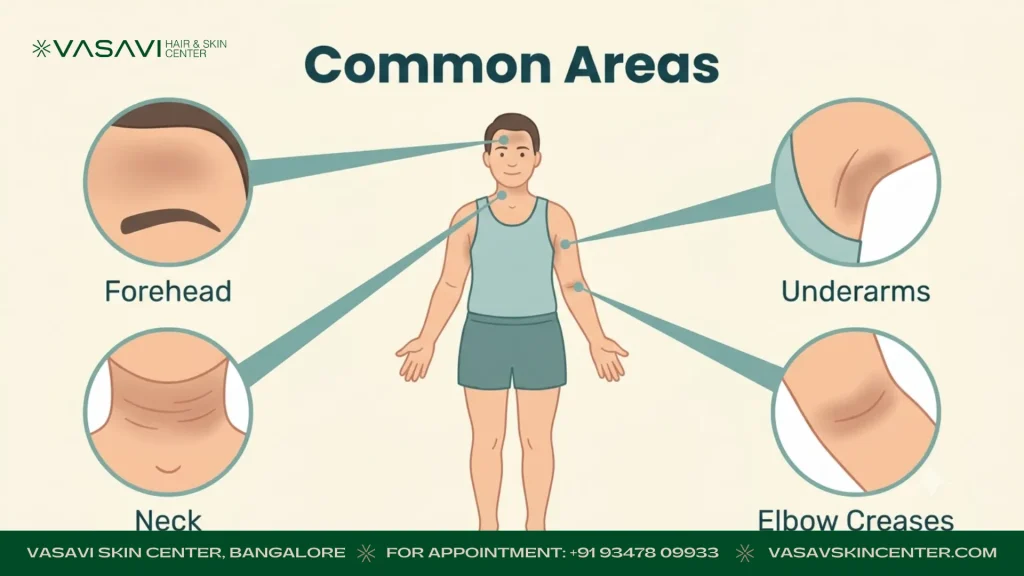
It is commonly seen in body folds such as the neck, underarms, groin and elbow creases. Some people also notice it on the temples, forehead or around the mouth.
Other conditions can also cause dark patches, so a proper examination is needed to confirm what it is. You can read more about our care for pigmentation concerns.
What causes it?
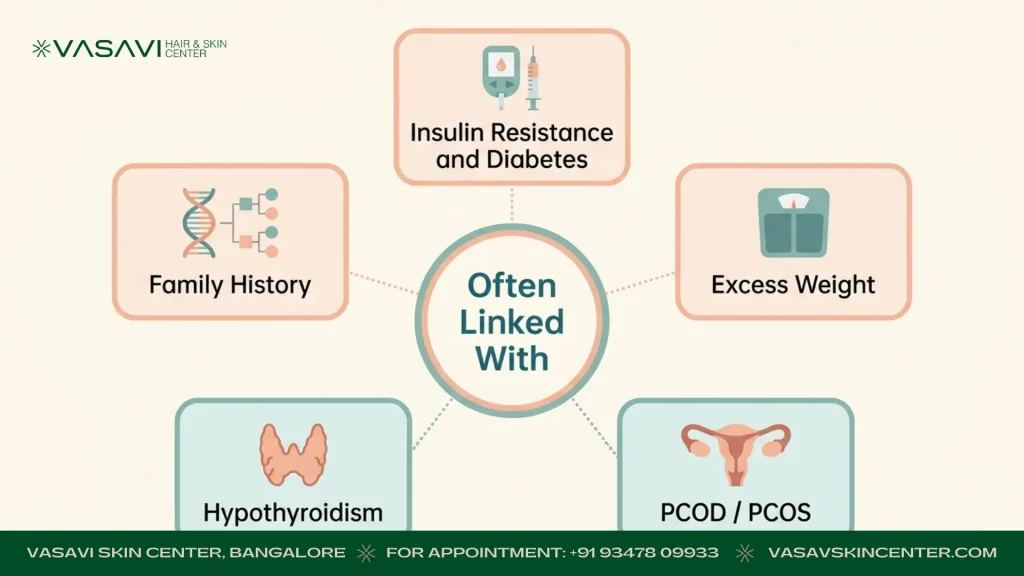
Acanthosis nigricans is often associated with:
- Insulin resistance, prediabetes or diabetes
- Excess body weight
- PCOD or PCOS
- Hypothyroidism
- Family history, as it can run in some families
Certain medicines, such as steroids and some hormonal medicines, can also be linked to it. Please do not stop any prescribed medicine on your own. Speak to your doctor first.
Rarely, it can be a sign of a more serious internal illness, including some cancers. See a doctor early if the patches appear suddenly or spread quickly, especially if you are also losing weight without trying.
Why creams alone are not enough
Skin creams with active ingredients may help the appearance in some people. However, they do not treat the underlying cause. Using strong products without advice can also irritate your skin, particularly in the folds.
A medical evaluation helps find out why the patches have appeared. Depending on your history and examination, your doctor may advise blood tests, such as tests for blood sugar or thyroid function. Some people may also need to see another specialist.
How is acanthosis nigricans managed?
Treatment depends on the cause, so it differs from person to person. Managing the underlying condition comes first.
Regular physical activity plays a key role, especially when insulin resistance is involved. If you are overweight, gradual weight reduction can help improve the patches. These changes take time, and the response varies.
After assessing your skin, a dermatologist may also suggest suitable skin care treatments along with the medical care you need.
When should you see a dermatologist?
Book a visit if you notice dark, thick or velvety skin on your neck, underarms or other folds. It is also worth getting checked if you have diabetes, PCOD, thyroid problems or recent weight gain along with these changes. The same applies to children who develop such patches.
If you are in Bangalore, you can book an appointment with Dr. Ch. Sree Vasavi at Vasavi Hair & Skin Center, or contact the clinic in Thanisandra.
Frequently asked questions
Can scrubbing remove a dark neck?
Not if it is due to acanthosis nigricans. The change is in the skin itself and is not a layer of dirt.
Does a dark neck mean I have diabetes?
Not always. It is often linked to insulin resistance, but there are other causes too. A medical check-up can tell you more.
Can acanthosis nigricans improve?
It can improve in many people when the underlying cause is identified and managed. How much it improves, and how soon, differs for each person. When it runs in the family, it may be harder to clear.
This article is for general education and does not replace a consultation with a doctor.
