
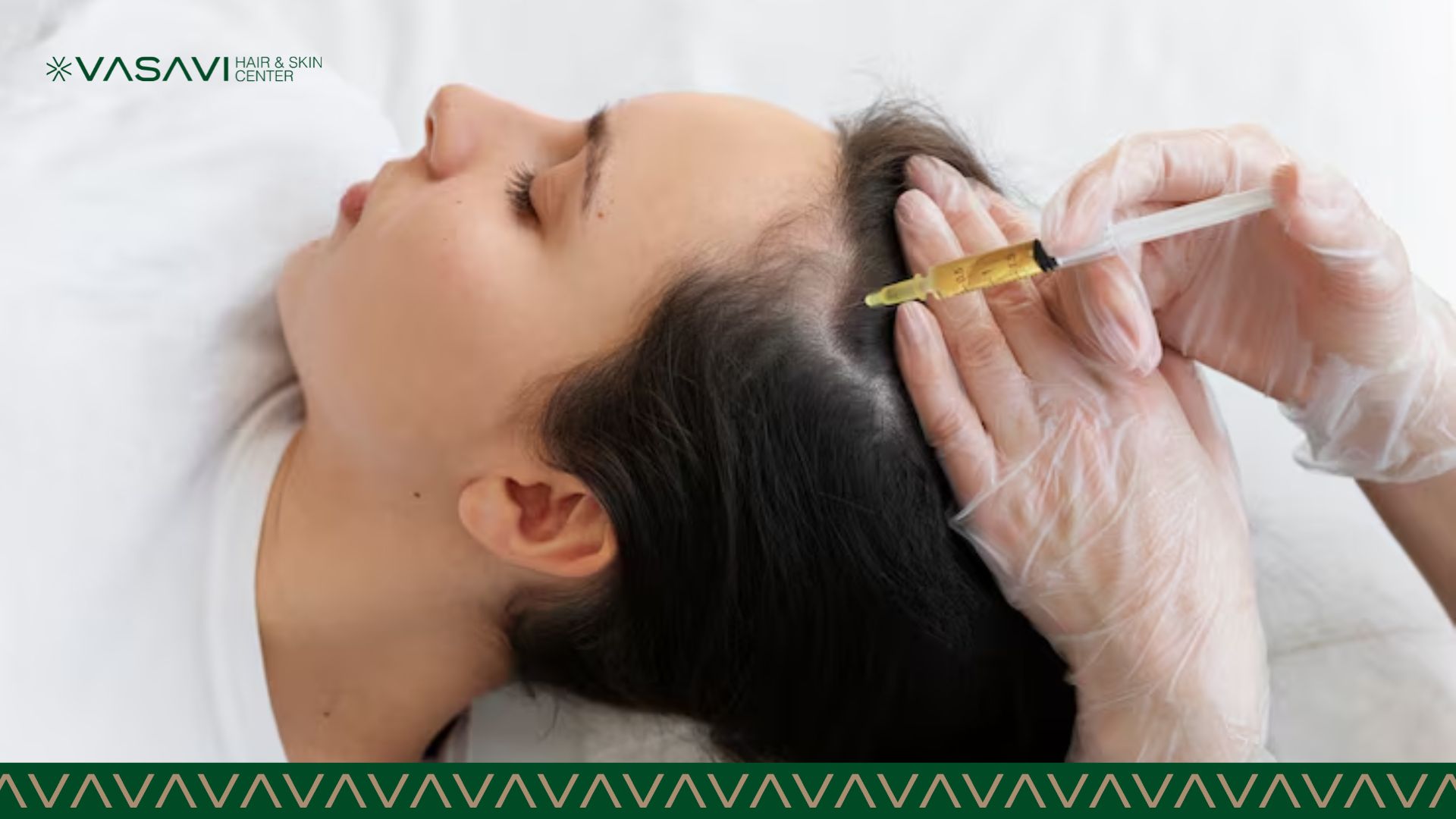
Dealing with thinning hair? Watching your hairline retreat? Losing more hair than usual in the shower?
You’re not alone. Hair loss affects millions—both men and women. And while there are options (medications, transplants), PRP therapy offers something unique: a natural, non-surgical way to regrow your own hair using your body’s healing power.
No scalpels. No stitches. Just your own blood’s growth factors working to wake up dormant hair follicles.
Sounds almost too good to be true, right? Let’s break down exactly how it works.
What is PRP Therapy?
PRP stands for Platelet-Rich Plasma.
Here’s the science in simple terms:
Your blood contains platelets—tiny cells that help with clotting and healing. These platelets are loaded with growth factors: proteins that signal your body to repair tissue, build new blood vessels, and stimulate cell growth.
PRP therapy concentrates these platelets and injects them into your scalp. The growth factors then:
- Wake up dormant hair follicles
- Increase blood flow to follicles
- Stimulate new hair growth
- Strengthen existing hair
Think of it as fertilizer for your scalp.
How the PRP Process Works
The entire procedure takes about 30-60 minutes. Here’s what happens:
Step 1: Blood Draw
A small amount of blood is drawn from your arm (similar to a regular blood test—about 10-20ml).
Step 2: Centrifuge
Your blood is placed in a centrifuge machine that spins at high speed for 10-15 minutes. This separates the platelet-rich plasma from red blood cells.
Step 3: Preparation
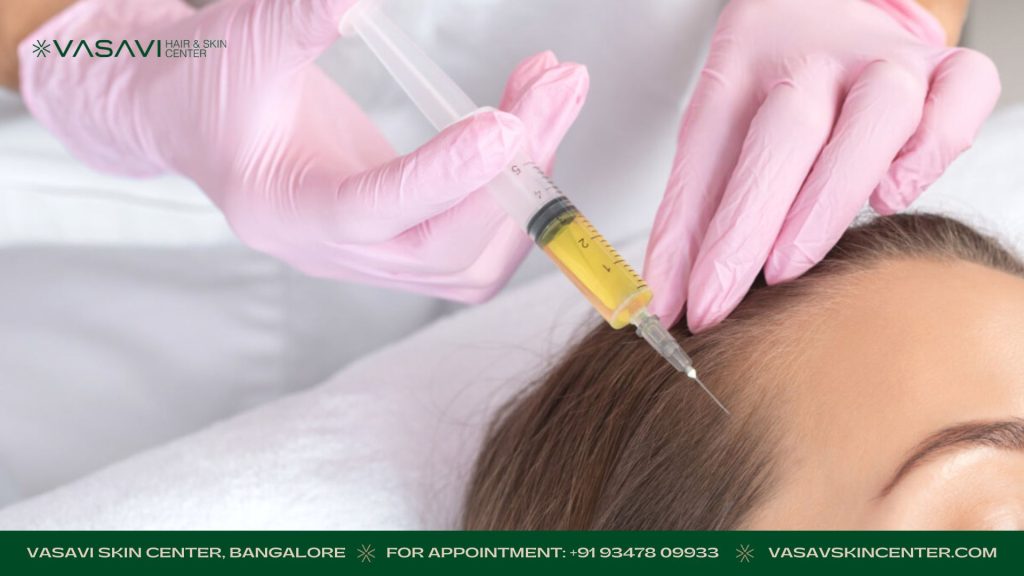
The PRP (which looks like golden liquid) is extracted and prepared for injection.
Step 4: Scalp Injection
Your scalp is numbed with a topical anesthetic. The PRP is injected into areas with thinning hair or balding using very fine needles.
Step 5: Recovery
You’re done! No downtime. You
can resume normal activities immediately.
What Does PRP Therapy Treat?
PRP works best for:
✓ Androgenetic Alopecia (male/female pattern baldness)
✓ Diffuse Thinning (overall hair loss across the scalp)
✓ Early Hair Loss (catching it before it’s too advanced)
✓ Post-Pregnancy Hair Loss
✓ Alopecia Areata (patchy hair loss)
✓ Traction Alopecia (from tight hairstyles)
It’s less effective for:
1. Completely bald areas with no follicles left
2. Very advanced baldness
3. Scarring alopecia
The key? PRP works best when there are still some living follicles to stimulate.
Does PRP Actually Work?
Short answer: Yes, for most people.
Studies show:
- 70-80% of patients see noticeable improvement
- Hair density increases by 20-30% on average
- Hair thickness improves
- Hair shedding decreases
Real results:
Most people see baby hair growth (vellus hairs) around month 2-3. These progressively thicken and become terminal (full) hairs by month 6.
Important: Results vary. Some see dramatic improvement. Others see moderate regrowth. A few see minimal change.
Timeline: What to Expect
During Treatment:
Mild discomfort from injections (numbing cream helps). Slight pressure on scalp.
First 24-48 Hours:
Mild soreness, slight redness. Very manageable.
Weeks 1-4:
Not much visible change yet. But beneath the surface, growth factors are working.
Months 2-3:
New baby hair growth visible. Existing hair feels stronger.
Months 4-6:
Noticeable thickness and density. Hair looks fuller.
Months 9-12:
Peak results. Continued improvement as new hair matures.
How Many Sessions Do You Need?
Initial Treatment:
3-4 sessions spaced 4-6 weeks apart
Maintenance:
1-2 sessions per year to sustain results
PRP isn’t a one-and-done. It requires commitment.
PRP vs Other Hair Loss Treatments
| Treatment | Invasiveness | Results Timeline | Maintenance |
|---|---|---|---|
| PRP | Minimally invasive | 3-6 months | Yearly |
| Hair Transplant | Surgical | 9-12 months | None (permanent) |
| Minoxidil | Topical | 4-8 months | Daily forever |
| Finasteride | Oral medication | 6-12 months | Daily forever |
Why PRP stands out:
- Natural (your own blood)
- No hormonal side effects
- Can be combined with other treatments
- Strengthens existing hair
Combining PRP with Other Treatments
Many people get best results by combining PRP with:
Minoxidil (Rogaine)
Topical solution that promotes hair growth. PRP + Minoxidil = supercharged results.
Finasteride (Propecia)
Oral medication that blocks DHT (hormone causing hair loss). Works differently than PRP.
Hair Transplant
Some surgeons inject PRP during/after transplant surgery to boost graft survival and healing.
Low-Level Laser Therapy
Laser caps/helmets that stimulate follicles. Complements PRP well.
Your dermatologist will create a comprehensive plan.
Who’s a Good Candidate?
Ideal candidates: ✓ Early to moderate hair loss
✓ Still have active hair follicles
✓ Androgenetic alopecia
✓ Healthy overall
✓ Realistic expectations
Not ideal:
1. Advanced baldness with no follicles
2. Certain medical conditions (blood disorders, platelet dysfunction)
3. Pregnant/breastfeeding
Is PRP Safe?
Extremely safe. Since it uses your own blood, there’s virtually no risk of allergic reaction or rejection.
Potential side effects (rare and mild):
- Mild pain at injection sites
- Temporary swelling
- Slight redness
- Mild headache
Infection risk is minimal when done in sterile conditions.
What to Do Before PRP
1 Week Before:
- Avoid anti-inflammatory medications (ibuprofen, aspirin)
- Stop blood-thinning supplements (fish oil, vitamin E)
- Stay hydrated
Day Of:
- Eat a good meal beforehand
- Come with clean, product-free hair
- Avoid alcohol 24 hours before
Aftercare Instructions
First 24 Hours:
- Don’t wash hair
- Avoid intense exercise
- No alcohol
- Stay out of direct sun
First Week:
- Use gentle shampoo
- No hair coloring or chemical treatments
- Avoid swimming pools/saunas
- Be gentle when brushing
Ongoing:
- Follow prescribed medications or topical treatments
- Maintain healthy diet
- Manage stress
- Attend follow-up sessions
Myths About PRP
Myth: It’s painful
Truth: Numbing cream makes it very tolerable. Mild discomfort at most.
Myth: Results are immediate
Truth: Hair growth takes time. Expect to wait 2-3 months for visible changes.
Myth: It’s a permanent fix
Truth: Results last 1-2 years. Maintenance sessions needed.
Myth: One session is enough
Truth: Most people need 3-4 initial sessions for best results.
Myth: It works for everyone
Truth: 70-80% see improvement. Results vary.
Why Choose PRP?
Natural: Uses your body’s own healing mechanisms
Safe: Minimal side effects
No downtime: Resume life immediately
Versatile: Works for various hair loss types
Complementary: Enhances other treatmentsNo hormones:** Great for those who can’t take medications
Ready to Explore PRP Therapy?
If you’re dealing with hair thinning and want a natural, non-surgical solution, PRP might be perfect for you. Book Your PRP Hair Loss Consultation
Frequently Asked Questions
How long do PRP results last?
12-18 months typically. Maintenance sessions extend results.
Is PRP better than a hair transplant?
Different purposes. PRP stimulates existing follicles. Transplants move follicles. Some do both.
Can women get PRP?
Absolutely! It’s great for female pattern hair loss and post-pregnancy thinning.
Does insurance cover PRP?
Typically no, as it’s considered cosmetic. Check with your provider.
Can I color my hair after PRP?
Wait at least 72 hours, preferably 1 week.
Will my hair fall out again after PRP?
Hair loss may resume if the underlying cause (like genetics) isn’t controlled. Maintenance helps.