

Vegetarian and Worried About Vitamin B12? How Milk, Curd and Eggs Can Help
If you do not eat meat or fish, it is natural to wonder where your vitamin B12 will come from. The good news is that many vegetarians can meet their daily need with foods already in their kitchen, as long as they include dairy or eggs regularly.
Why vitamin B12 matters
Vitamin B12 helps your body make healthy red blood cells and keeps your nerves working properly. Our body cannot make it on its own, so it has to come from food or supplements.
Low B12 can sometimes show up as tiredness, tingling in the hands and feet, mouth ulcers, hair thinning or changes in skin colour. Please remember that these signs can have many other causes too, so one symptom alone does not mean your B12 is low. A proper check is the only way to know.
How much B12 do you need
For most adults, the recommended daily amount is 2.4 micrograms. It is a very small quantity, but it needs to come in regularly.
Vitamin B12 is naturally found in animal based foods like fish, meat, poultry and dairy products. For vegetarians, dairy and eggs are the main natural sources.
A simple way to plan it with milk, curd and eggs
You do not need a complicated diet chart. These approximate figures make it easy to plan your day:
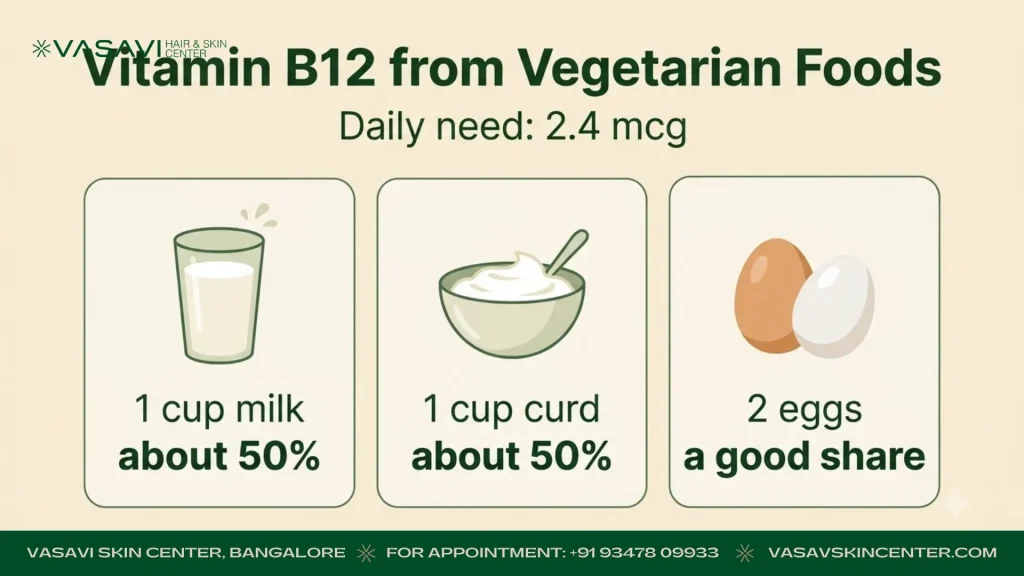
- One cup of milk gives about 50% of the daily requirement
- One cup of curd gives about 50%
- Two eggs add a good share as well
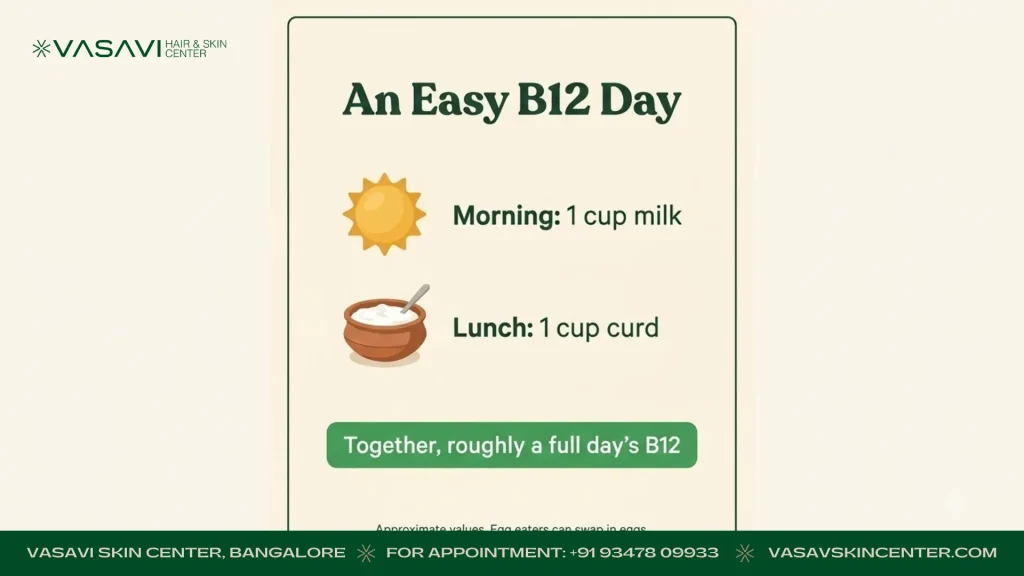
So you can pick a combination that suits you. For example, a cup of milk in the morning and a cup of curd with lunch together can cover roughly a full day’s need. If you eat eggs, they can take the place of one of these.
If you do not take dairy or eggs
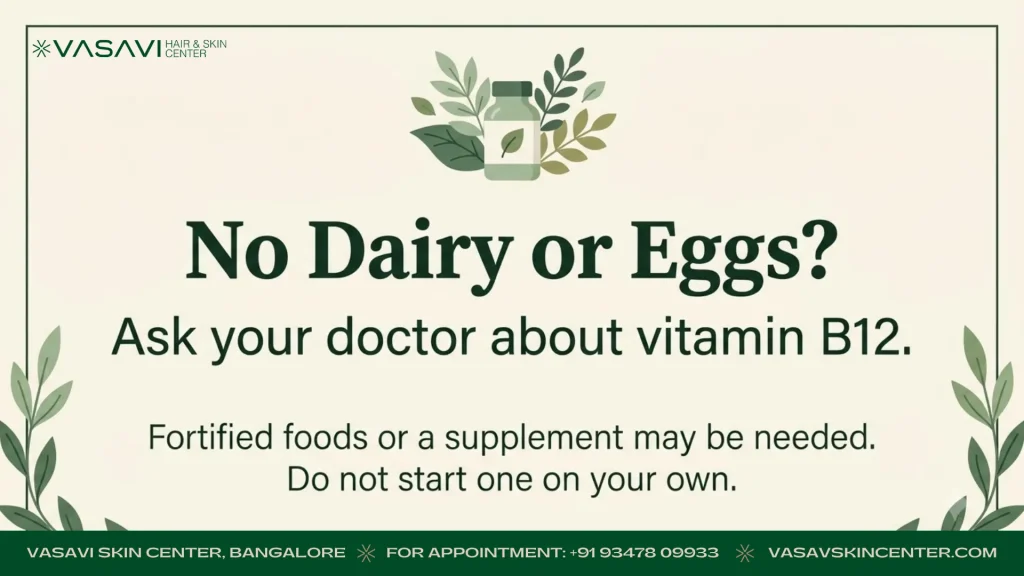
If you are vegan, or you eat very little milk, curd or eggs, getting enough B12 from food alone can be difficult. In this case, fortified foods or a supplement may be needed. Please do not start a supplement on your own. The right type and dose depend on your blood report and your doctor’s advice.
Eating well but still low on B12?
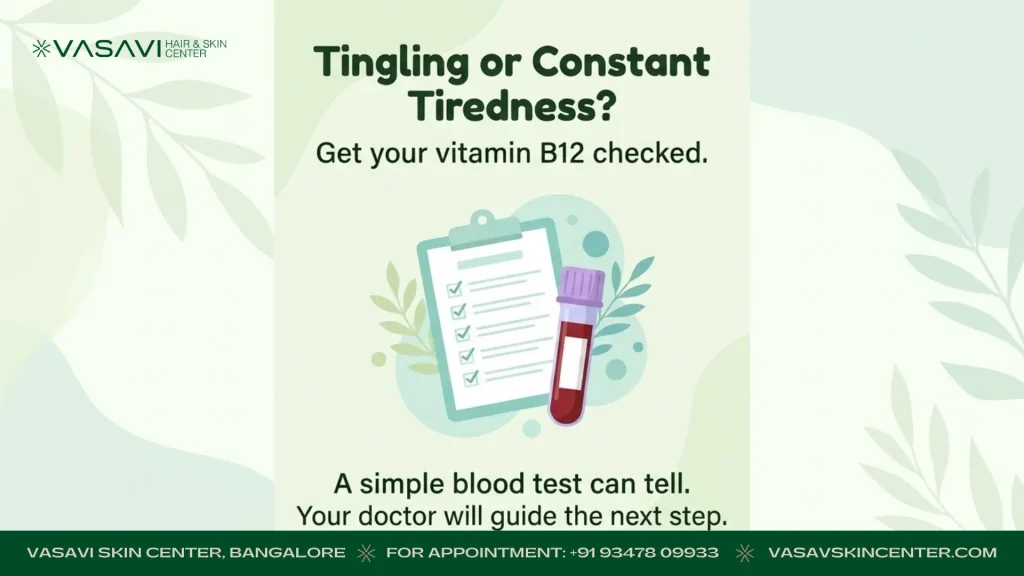
Some people have low B12 even with a good diet, because their body does not absorb it well. Certain medicines and digestive problems can also affect absorption. If you are feeling unusually tired, notice tingling or numbness, or see changes in your hair or skin, get a simple blood test done and let your doctor guide you.
When to see a dermatologist
Hair fall and pigmentation have many possible reasons, and nutrition is only one of them. If you are worried about thinning hair, you can read about our hair care treatments. If you have uneven skin tone or dark patches, our page on pigmentation treatment explains how we approach it. You can also browse more articles in Beauty Insights.
Treatment always depends on a proper assessment of your skin and hair. You can book an appointment with Dr. Ch. Sree Vasavi at Vasavi Hair & Skin Center, Bangalore, to discuss your concerns in person.
FAQs
How much vitamin B12 does an adult need every day? The recommended daily amount for adults is 2.4 micrograms.
Can vegetarians get enough vitamin B12 from food? Many can, if they include milk, curd or eggs regularly. Plant foods alone do not reliably provide B12.
Is one cup of milk enough for the whole day? One cup of milk gives about half of the daily requirement. Adding a cup of curd or eggs through the day helps cover the rest.
I am vegan. What should I do about B12? Vegans usually need fortified foods or a supplement. Please get your B12 level checked and let your doctor decide the type and dose.
Can low vitamin B12 cause hair fall or pigmentation? It can be one of the possible reasons in some people, but hair fall and pigmentation have many causes. A dermatologist can examine you and advise the right tests.
