
Vitamin C is a water soluble vitamin, so many people assume the body simply flushes out whatever it does not need and that taking more is always safe. That is only partly true. Water soluble does not mean unlimited, and high doses of vitamin C can cause problems in some people.
In our clinic we often meet patients who take vitamin C tablets, effervescent drinks or chewables every day, usually hoping for better skin or fewer colds, without really knowing how much they are taking in total. This post explains how much your body actually needs, what happens when you go over the limit, and who needs to be extra careful.
How much vitamin C do you need in a day?
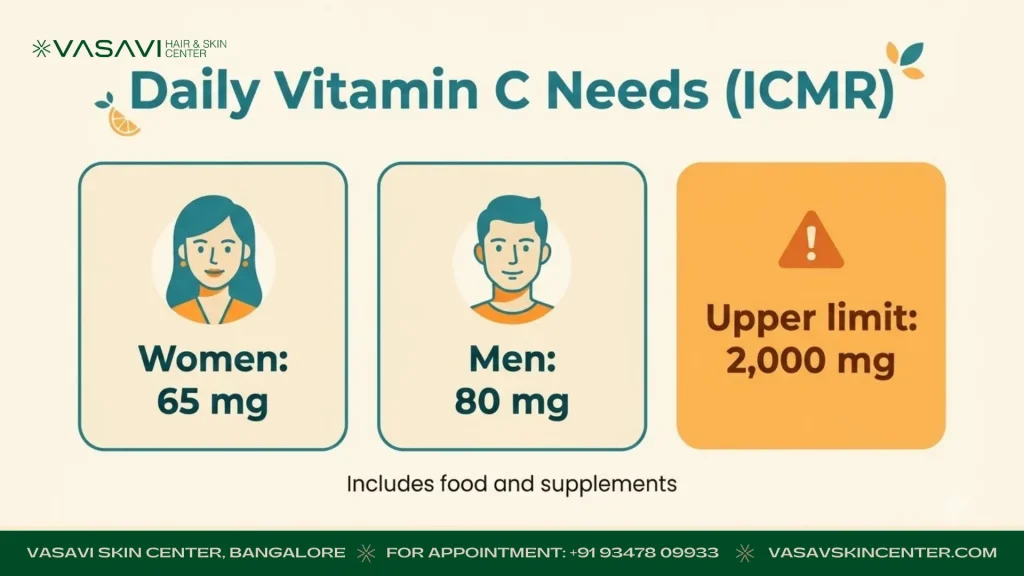
According to ICMR, the recommended dietary allowance of vitamin C is 65 mg a day for women and 80 mg a day for men. That is a small amount, and most people eating a normal Indian diet with some fruit and vegetables can reach it without any supplement. Amla, guava, oranges, lemon, tomatoes and capsicum are all good sources.
The upper limit is 2,000 mg a day. This is the total from everything you take, so your diet and your supplements both count. Many over-the-counter tablets contain 500 mg or 1,000 mg each, so it is easier to cross the limit than most people think, especially if you are taking more than one product.
What can happen if you take too much vitamin C?
When the amount goes well beyond what the body can absorb, the extra vitamin C stays in the gut and in the urine. This is where most of the problems come from.
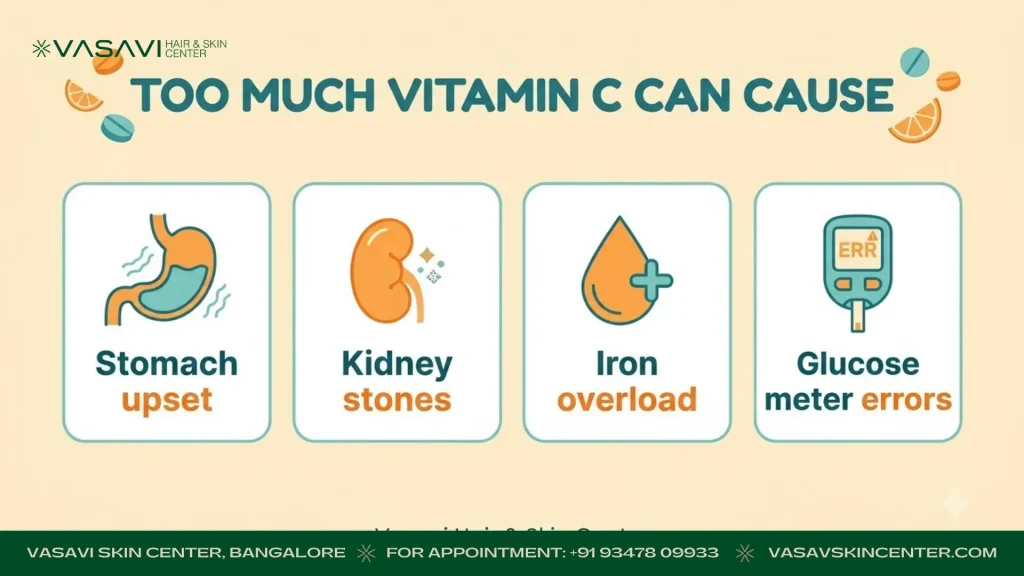
Stomach and gut problems. This is the most common one. Loose motions, nausea, stomach cramps, bloating and acidity can all show up, and they usually settle once the dose is brought down. Taking the tablet on an empty stomach tends to make it worse.
Kidney stones. Some of the vitamin C is turned into oxalate and passed out in the urine. In people who are already prone to stones, large amounts over a long time can raise the chance of calcium oxalate stones. Pain in the side or back, burning while passing urine, or blood in the urine needs a doctor’s attention.
Too much iron in the body. Vitamin C helps the body absorb iron from food. That is useful for most people, but in someone with an iron overload condition such as hemochromatosis, high doses can add to the problem.
Wrong blood sugar readings. Very high doses of vitamin C can interfere with some home glucose meters and give a false reading. If you have diabetes and take large amounts of vitamin C, mention it to your doctor.
A lot of people who take high doses never notice anything. But the fact that you feel fine today does not mean the dose is right for you, which is why the total daily amount matters.
Who should be extra careful?
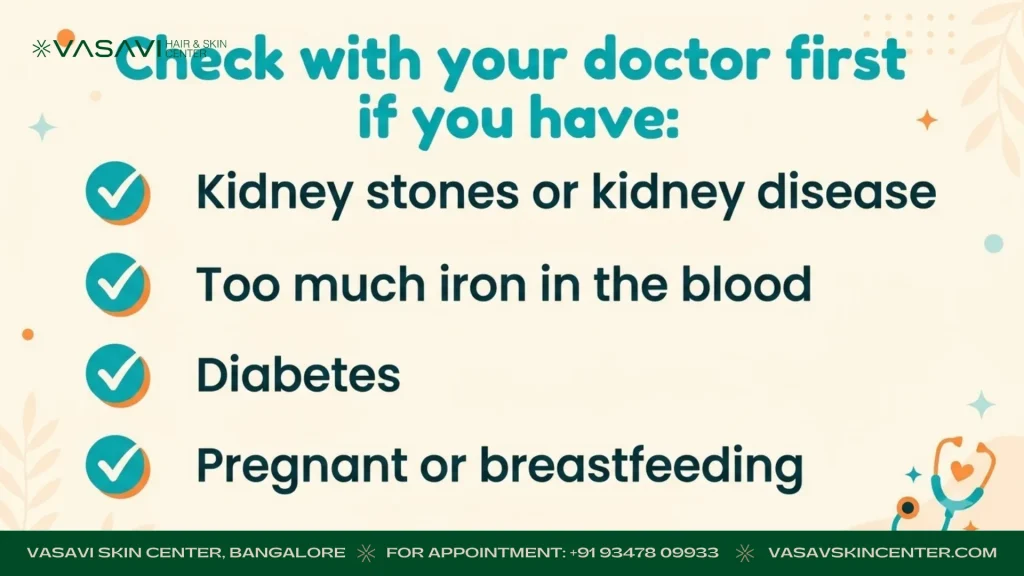
Please speak to your doctor before taking vitamin C supplements, especially in higher doses, if any of these apply to you:
- You have had kidney stones, or you have kidney disease
- You have been told you have too much iron in your blood
- You have diabetes and check your sugars at home
- You are pregnant or breastfeeding
- You take regular medicines for any long-term condition
Children need much lower amounts than adults, so adult tablets should never be given to them without a doctor’s advice.

Does this apply to vitamin C serums on the skin?
No. This post is about vitamin C taken by mouth. Vitamin C serums and creams used on the skin are a different matter, and whether one suits you depends on your skin type, your skin concerns and what else you are already using. If you want to add one to your routine, it is better to have your skin assessed first. You can read more about how we approach skin concerns on our skin care treatments page.
When should you see a doctor?
Stop the supplement and get medical advice if you have loose motions that do not settle, severe stomach pain, pain in the side or back, or blood in the urine. Do not wait for it to pass if the symptoms are strong or keep coming back.
Common questions
Is it safe to take vitamin C every day? For most healthy adults, an amount within the recommended range is safe, and food usually provides enough. Supplements are worth taking mainly when a doctor has found a reason for them.
Can vitamin C tablets give glowing skin? No tablet can promise that. Skin health depends on sleep, diet, sun protection, hormones, skin type and any underlying skin condition. Taking more vitamin C than you need will not make the skin better.
Should I take vitamin C on an empty stomach? Many people find it upsets the stomach that way. Taking it after food is usually gentler, but the dose still matters more than the timing.
What if I have already been taking 1,000 mg or more daily? Do not panic. Bring the dose down to what your doctor advises and watch for stomach upset or urinary symptoms. If you have a history of kidney stones, get checked.
A word before you buy the next bottle
It is easy to treat vitamin C as harmless because it is sold everywhere without a prescription. A better habit is to check the dose on the label, add up everything you take in a day, and ask your doctor if you are unsure.
If you have a skin or hair concern and have been trying supplements on your own, you are welcome to visit us. Dr. Ch. Sree Vasavi will look at your skin or hair, understand what you have been taking, and suggest what actually suits you. You can book an appointment, learn more about Dr. Vasavi, or explore more articles in our Beauty Insights section.
This article is for general information and is not a substitute for medical advice. Treatment and supplement needs vary from person to person.
