
Author: Dr. Ch. Sree Vasavi, Vasavi Hair & Skin Center, Bengaluru (please get her final review before publishing)
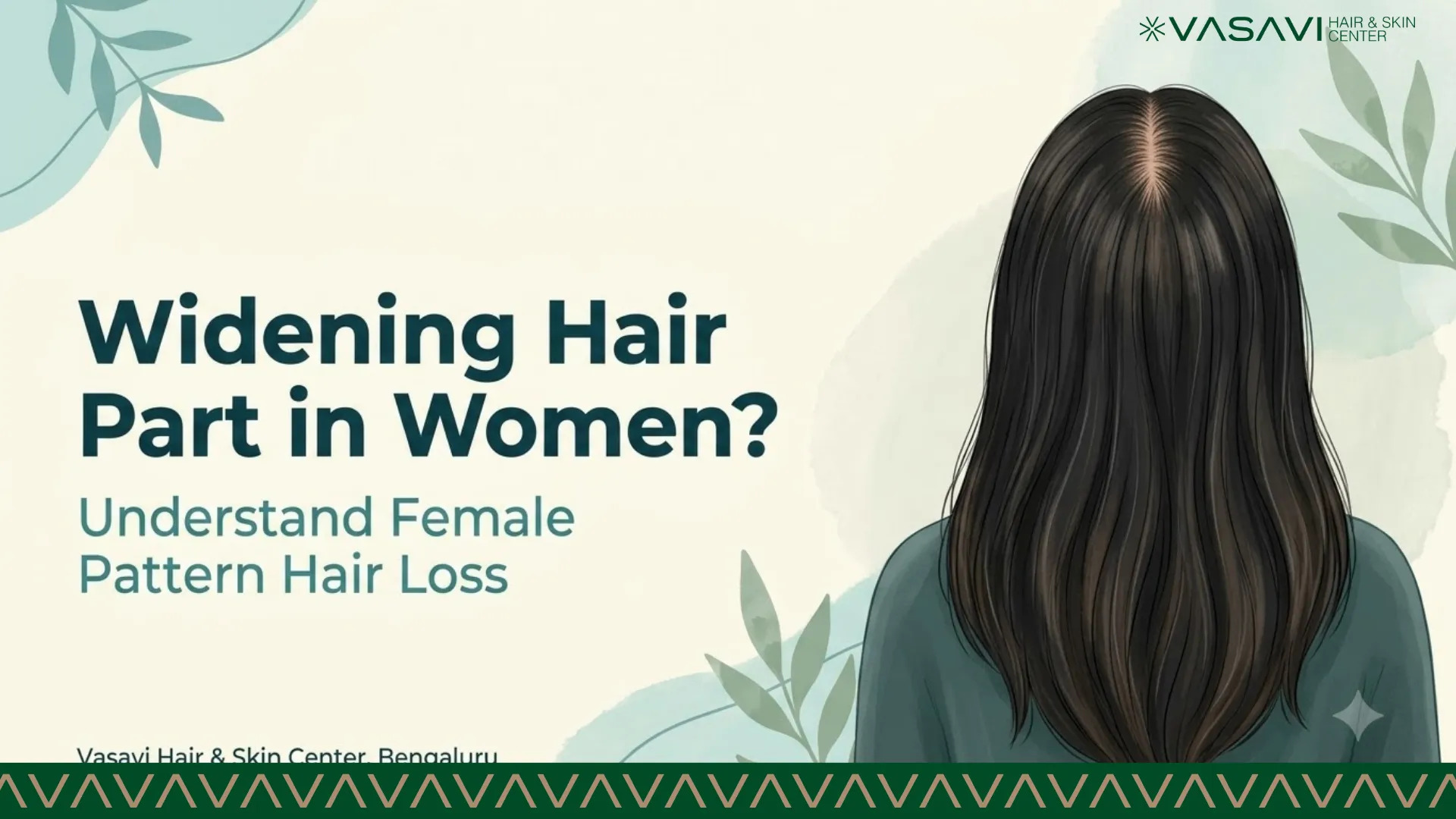
A lot of women notice it first in the mirror, or in a photo taken under bright light. The parting that used to be a thin line now looks wider. The scalp shows a little more than before. Or the ponytail feels thinner than it did a year or two ago.
If this sounds familiar, it may not be ordinary hair fall. It could be female pattern hair loss, sometimes called female pattern baldness. It is common in women, and because it happens slowly, most people notice it quite late.
What is female pattern hair loss?
It is a gradual thinning of hair that follows a pattern, rather than hair falling out suddenly in clumps. In women it usually shows up as loss of density and volume, not as complete baldness. That is why the first clue is often a wider parting and not a bald patch.
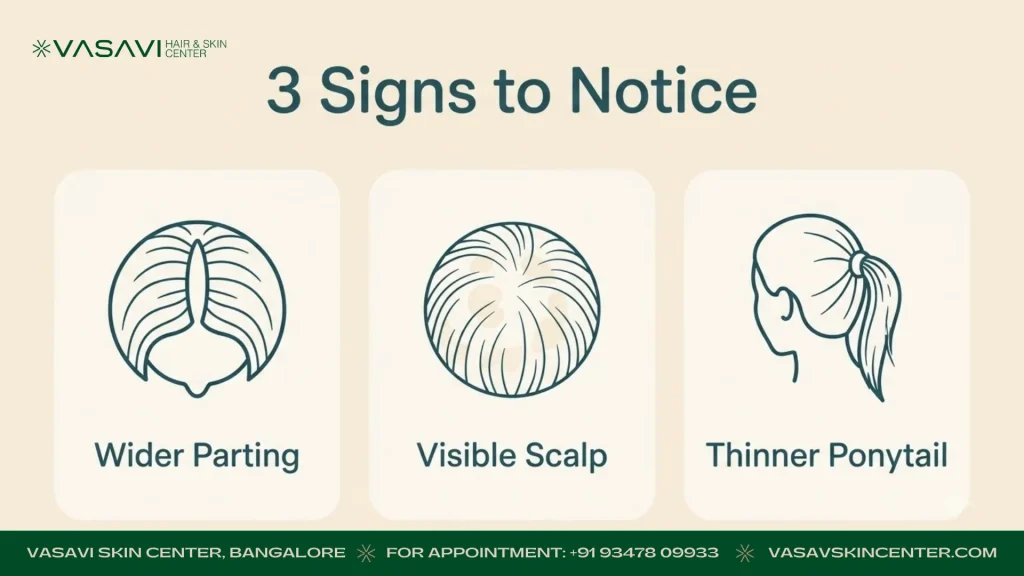
Signs you may notice
Your hair partition looks wider than before. The scalp is more visible, especially at the parting or under strong light. Your ponytail feels thinner when you tie it. Overall, your hair looks less full, and the new hair that grows seems finer and shorter than the older strands.
Why does it happen?
There are two main reasons.
The first is genetics. Some women inherit hair follicles that are more sensitive to androgens, which are hormones present in both men and women. In these follicles, the hair does not grow the way it used to.
The second is hormonal change. This is commonly seen during perimenopause and menopause, and in women with PCOD. When hormone levels shift, the hair cycle can be affected.

What is happening inside the scalp?
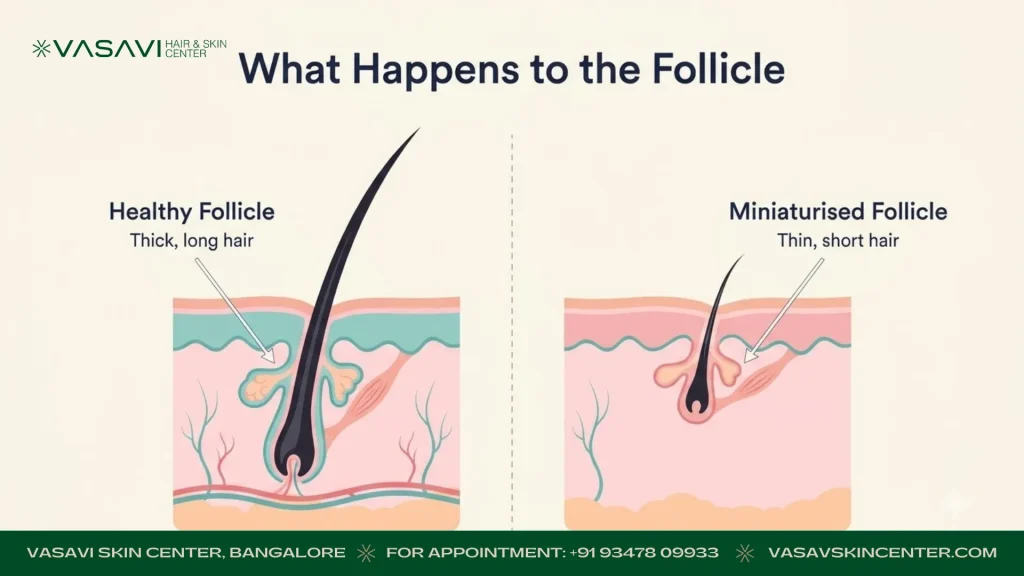
Every hair grows through a growth phase. In female pattern hair loss, this growth phase slowly becomes shorter. The follicle also begins to shrink, a process doctors call miniaturisation.
As the follicle gets smaller, the hair it produces becomes thinner, shorter and tinier with each cycle. Over time, the density of hair and the overall volume are lost. This is why it feels like your hair is not just falling, but also not growing back the way it did earlier.
Is it the same as normal hair fall?
Not exactly. Losing some hair every day is normal. In pattern hair loss, the real change is that the hair becomes progressively finer and the scalp becomes more visible. Other conditions can also cause thinning, which is why a proper examination matters before anything is assumed.
If your hair fall seems to increase mostly in colder months, you may also find our post on winter hair fall and scalp carehelpful.
When should you see a dermatologist?
Preferably as soon as you notice the change. Early diagnosis and treatment tend to give better results, so there is no need to wait until the thinning is very obvious.
Please avoid starting random oils, products or supplements on your own. What suits one person may not suit another, and the right plan depends on your hair and scalp assessment, your history, and the likely cause.
At your visit, the doctor will look at your scalp and hair, ask about your family history, periods, and any recent health changes, and then explain what is going on. Depending on that assessment, options may include medical treatments and procedures such as GFC hair treatment therapy. You can read about all our hair care treatments here.
If you would like your hair concern looked at properly, you can book an appointment with Dr. Ch. Sree Vasavi at Vasavi Hair & Skin Center, Bengaluru, or contact us with your questions. You can also read more about Dr. Vasavi.
Frequently asked questions
Does a wider hair parting always mean female pattern hair loss? Not always. It is a common sign, but other conditions can also cause thinning. A dermatologist can examine your scalp and tell you the reason.
Can hormonal changes cause thinning hair in women? Yes. Hormonal changes during perimenopause and menopause, and conditions like PCOD, can affect the hair growth cycle in some women.
Is female pattern hair loss hereditary? Genetics play a role. Some women inherit hair follicles that are sensitive to androgens, which makes them more likely to thin gradually.
Will I go completely bald? Female pattern hair loss typically shows up as thinning and loss of volume. How it progresses differs from person to person, which is why an early assessment helps.
Does early treatment make a difference? Early diagnosis and treatment generally help in getting better results, though outcomes vary from person to person.
This article is for general awareness and is not a substitute for a medical consultation.
