
Acne is common, but that does not make it simple.
Some people get it during school or college. Some continue to get breakouts well into adulthood. A few parents even notice tiny acne-like bumps on a newborn baby’s face and start worrying.
Here are three useful acne facts that can help you understand breakouts better before starting random products or home remedies.
If acne is painful, leaving marks, or keeps coming back, you can book an appointment for a dermatologist-guided consultation.
Quick Answer
Acne can affect people at different ages. Teen acne is common, adult acne is also seen, and newborn babies can sometimes develop a short-lasting acne-like condition.
Diet and skin care habits may also influence acne in some people, but acne usually has more than one cause.
Fact 1: Acne Is Very Common
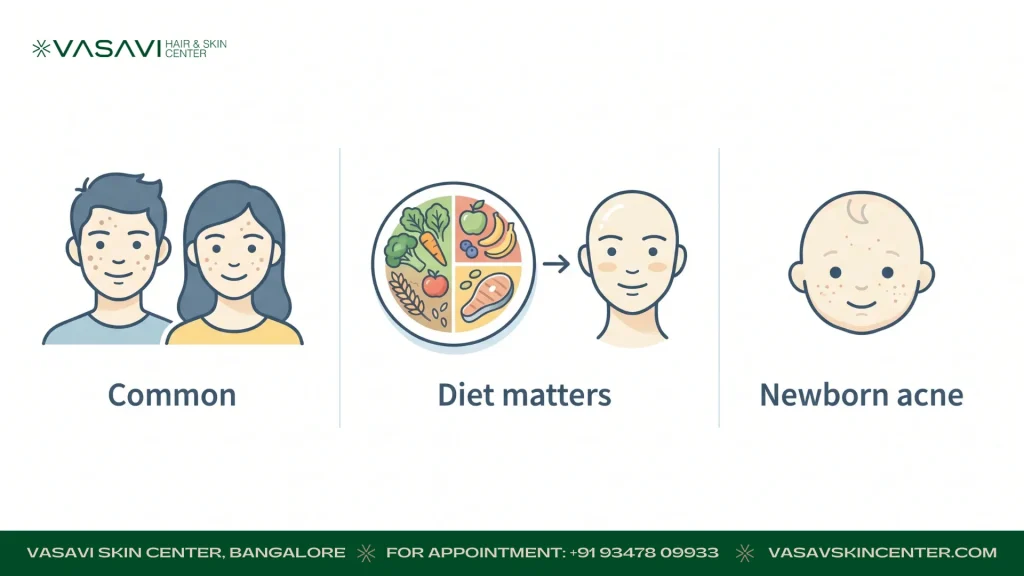
Acne affects many people at some point in life.
Teenage acne often begins around puberty. In girls, breakouts may start a little earlier. In boys, acne may appear slightly later and can sometimes be more severe.
That said, acne is not limited to teenagers. Adults can also get acne, especially around the jawline, chin, cheeks, or lower face.
The important thing is not to panic, but also not to ignore acne if it is becoming painful, frequent, or leaving pigmentation and scars.
Fact 2: Diet May Play A Role For Some People
Acne is not caused only by food.
Still, diet can influence breakouts in some people. High sugar foods, high glycemic foods, frequent processed foods, and dairy-heavy patterns may worsen acne for certain patients.
On the other hand, a balanced diet, enough water, regular sleep, gentle skin care, and sun protection can support healthier skin.
This does not mean one diet will clear acne for everyone. If you notice a clear link between certain foods and breakouts, write it down and discuss it during your consultation.
Fact 3: Newborn Babies Can Get Acne Too
Newborn acne can appear as small red or white bumps, often on the cheeks, nose, forehead, or sometimes the chest.
It may show up within the first few weeks after birth. In many babies, it settles on its own.
Do not apply adult acne creams, harsh face washes, scrubs, or home remedies on a baby’s skin. Baby skin is delicate. If the rash looks severe, spreads, has pus, or the baby seems unwell, check with a pediatrician or dermatologist.
When Acne Needs A Dermatologist Visit
You should consider a consultation if:
- Acne is painful
- Breakouts keep coming back
- Pimples are leaving dark marks
- You see pits or scars
- Acne continues after 25 years of age
- Periods are irregular along with acne
- Over-the-counter products are irritating your skin
Acne can be managed better when the reason behind it is understood. Treatment may include skin care correction, topical medicines, oral medicines, acne-safe sunscreen, and scar prevention advice.
You can also explore related skin care treatments and the acne category for more skin care information.
If acne has already left scars, read about acne scar treatment.
Acne Consultation In Bangalore
Patients from Thanisandra, Hegde Nagar, and nearby North Bangalore areas can visit for acne and acne scar consultation.
Clinic address:439, 1st Floor, Above HDFC bank, 5th Cross, MCECHS Layout, Dr Shivaram Karanth Nagar, Hegde Nagar, Thanisandra, Bengaluru – 560077
Contact Vasavi Skin Center or book an appointment.
Final Answer
Acne is common, but every breakout has a story.
Age, hormones, skin care, diet, stress, and product choices can all play a role. Instead of treating acne blindly, understand what is triggering it and get the right plan early.
Frequently Asked Questions
Is acne only a teenage problem?
No. Acne is common in teenagers, but adults can also get acne.
Can diet cause acne?
Diet may worsen acne in some people, especially high sugar, high glycemic, or dairy-heavy patterns. It is not the only cause.
Is newborn acne dangerous?
Newborn acne is often self-limiting, but severe, spreading, or pus-filled rashes should be checked by a doctor.
Can acne scars be prevented?
Early treatment can reduce the risk of acne marks and scars. Avoid picking or squeezing pimples.