
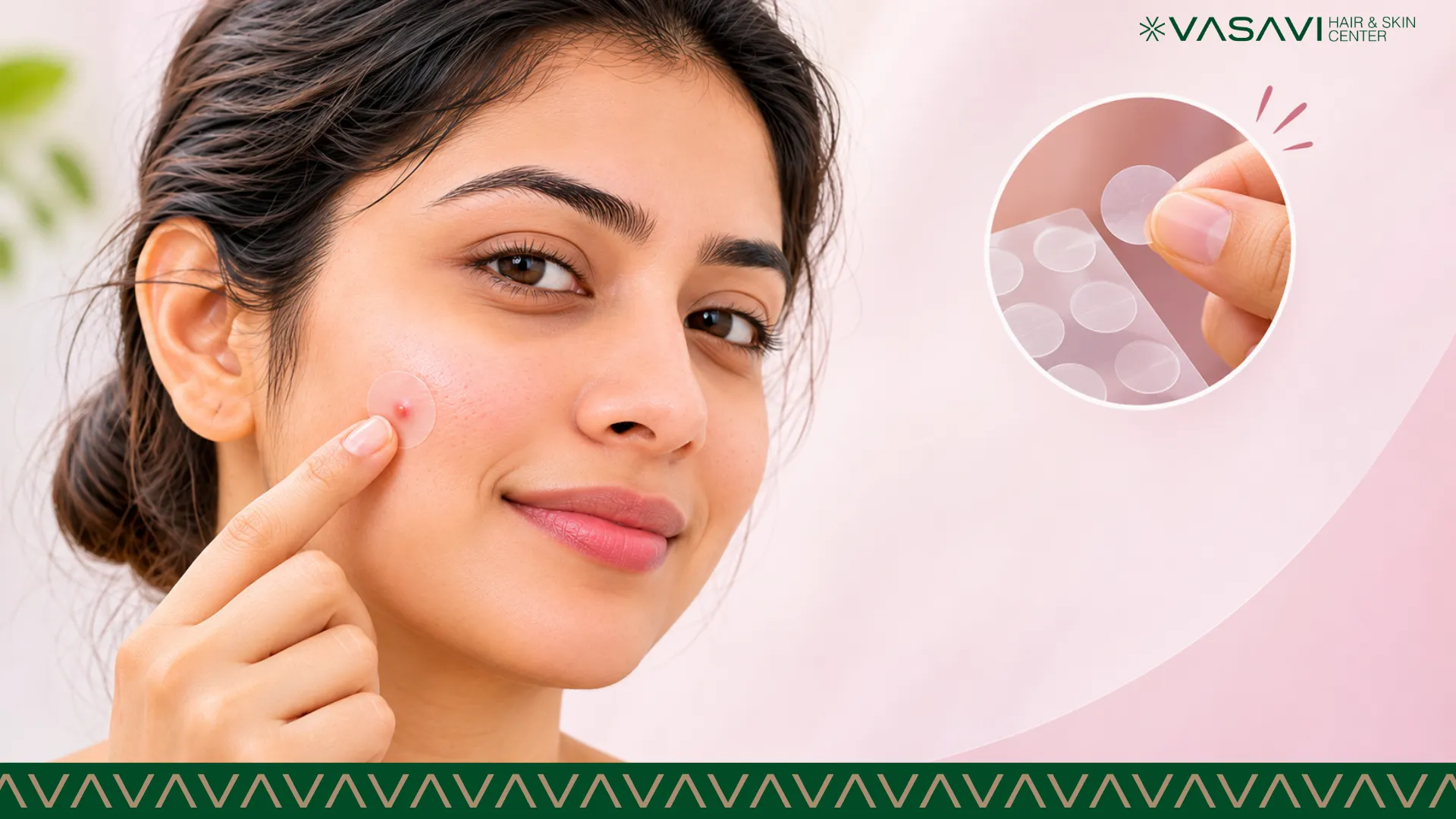
Pimple patches can be handy for an occasional spot, especially when a blemish has come to a head or is oozing. But using one the wrong way may reduce adhesion or irritate your skin. Here are four pimple patch mistakes to avoid, plus a simple way to use them more thoughtfully.
Quick answer: Apply a patch to clean, completely dry skin, follow the product’s wear-time directions, choose a simple hydrocolloid patch if you are sensitive to ingredients, and remember that patches are spot care, not a complete acne treatment.
Watch: 4 pimple patch mistakes to avoid
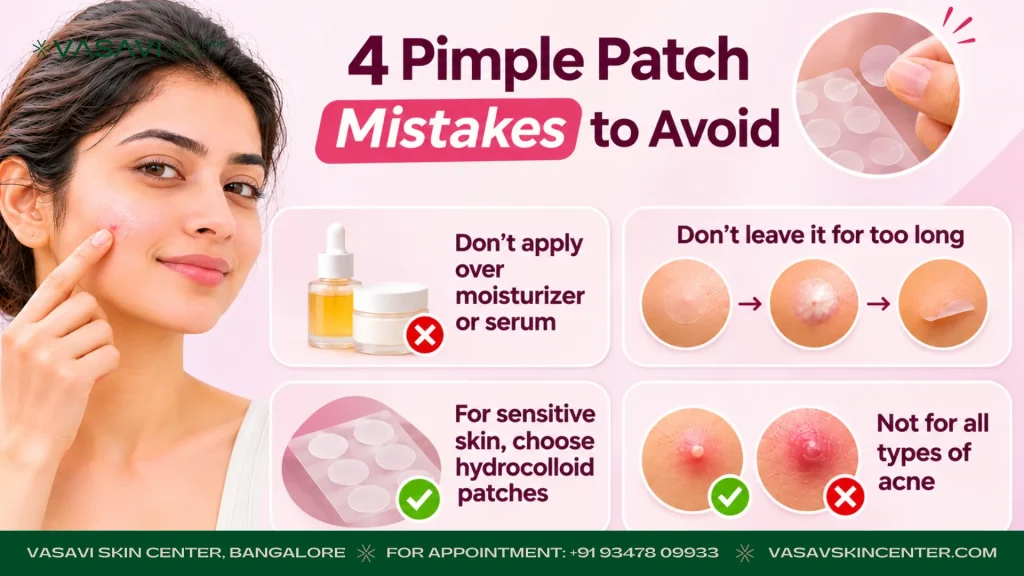
1. Applying a pimple patch over serum or moisturiser
Skincare residue, especially a rich cream or oily product, can prevent a patch from adhering well. If the edges lift, the patch may not stay in place.
Try this instead: Gently cleanse the area and pat it fully dry. Apply the patch directly to the clean, dry spot. Continue the rest of your skincare routine around it, rather than underneath it.
2. Leaving the patch on longer than its instructions recommend
There is no single wear time that applies to every pimple patch. Some are designed for a few hours, while others may be intended for overnight use. Follow the label for your particular product.
A hydrocolloid patch may become cloudy, white or swollen as it absorbs moisture from a spot. That appearance can be expected and does not, by itself, mean bacteria are growing or that the patch has become harmful. Remove it according to the directions, or sooner if it becomes uncomfortable, irritates your skin, leaks or its edges lift. Avoid keeping a used patch on indefinitely.
Pay extra attention to medicated patches. Formulas containing ingredients such as salicylic acid or tea tree oil may irritate some skin. Benzoyl peroxide can also cause dryness, redness, stinging or peeling, and some people can develop contact allergy. More contact is not automatically better. Do not exceed the product’s directions.
3. Choosing a medicated or microneedle patch when your skin is sensitive
If your skin reacts easily, a plain hydrocolloid patch may be a simpler option than a patch containing added active ingredients. However, hydrocolloid is not irritation-proof. The adhesive and repeated peeling or removal can also bother sensitive skin.
Microneedle or microdart patches are a different product category. Their ingredients, design and intended use vary, and they should not be treated as equivalent to a basic hydrocolloid dressing. Check the label and stop using a patch if you notice burning, persistent redness, itching or swelling.
4. Expecting pimple patches to treat every type of acne
Hydrocolloid patches are most useful for selected superficial spots, particularly pimples that have opened or are draining. They cover the area, absorb fluid and can help discourage picking.
They are much less useful for blackheads, whiteheads that have not opened, or deeper painful nodules and cysts. A patch also does not prevent new acne lesions from forming or address every underlying cause of acne. Evidence for acne patches is still limited, and they should be considered an optional spot-care aid rather than a substitute for acne treatment.
Avoid squeezing or deliberately opening a pimple to make a patch work. Picking can worsen inflammation and increase the risk of marks or scarring.
How to use a pimple patch
- Wash your hands and gently cleanse the skin.
- Pat the area completely dry.
- Place the patch on the spot, following the package instructions.
- Leave it on only for the recommended duration.
- Remove gently. Do not pull hard or repeatedly reapply over irritated skin.
- Stop if you develop irritation or a reaction.
When should you see a dermatologist?
Consider a dermatology assessment if breakouts are frequent, painful, deep, leaving scars or dark marks, or not improving with an appropriate routine. Deep nodules and cysts may need medical treatment. Seek prompt medical care if a spot becomes rapidly more red, hot or swollen, redness spreads, or you develop fever or feel unwell.
Frequently asked questions
Can I apply a pimple patch after moisturiser?
For best adhesion, place the patch directly on clean, dry skin before applying moisturiser to surrounding areas. Product instructions may vary.
Should I remove a pimple patch when it turns white?
Cloudiness or whitening often happens as hydrocolloid absorbs moisture. Follow the wear-time instructions and remove it if it is lifting, leaking, uncomfortable or irritating your skin. Colour change alone is not a reliable sign of infection.
Are hydrocolloid pimple patches good for sensitive skin?
A plain hydrocolloid patch avoids added acne actives, which may make it a reasonable option for some people. But adhesives and removal can still irritate skin. Test cautiously and stop if a reaction develops.
Do pimple patches work on cystic acne?
They generally do not reach or treat deep cysts or nodules. Painful, deep or recurring acne deserves an individualized assessment because patches alone are unlikely to be enough.
Can I use pimple patches every day?
Use only as directed on suitable individual spots. Daily patch use does not replace an acne routine or assessment, especially if breakouts keep returning.
The takeaway
Pimple patches can be useful for a limited purpose, but clean and dry application, product-specific wear time and realistic expectations matter. Choose a formula your skin tolerates, avoid picking, and seek dermatology advice for persistent or deeper acne.
Educational information only. This article is not a diagnosis or individualized treatment plan. A qualified clinician can assess persistent or concerning skin symptoms.
