
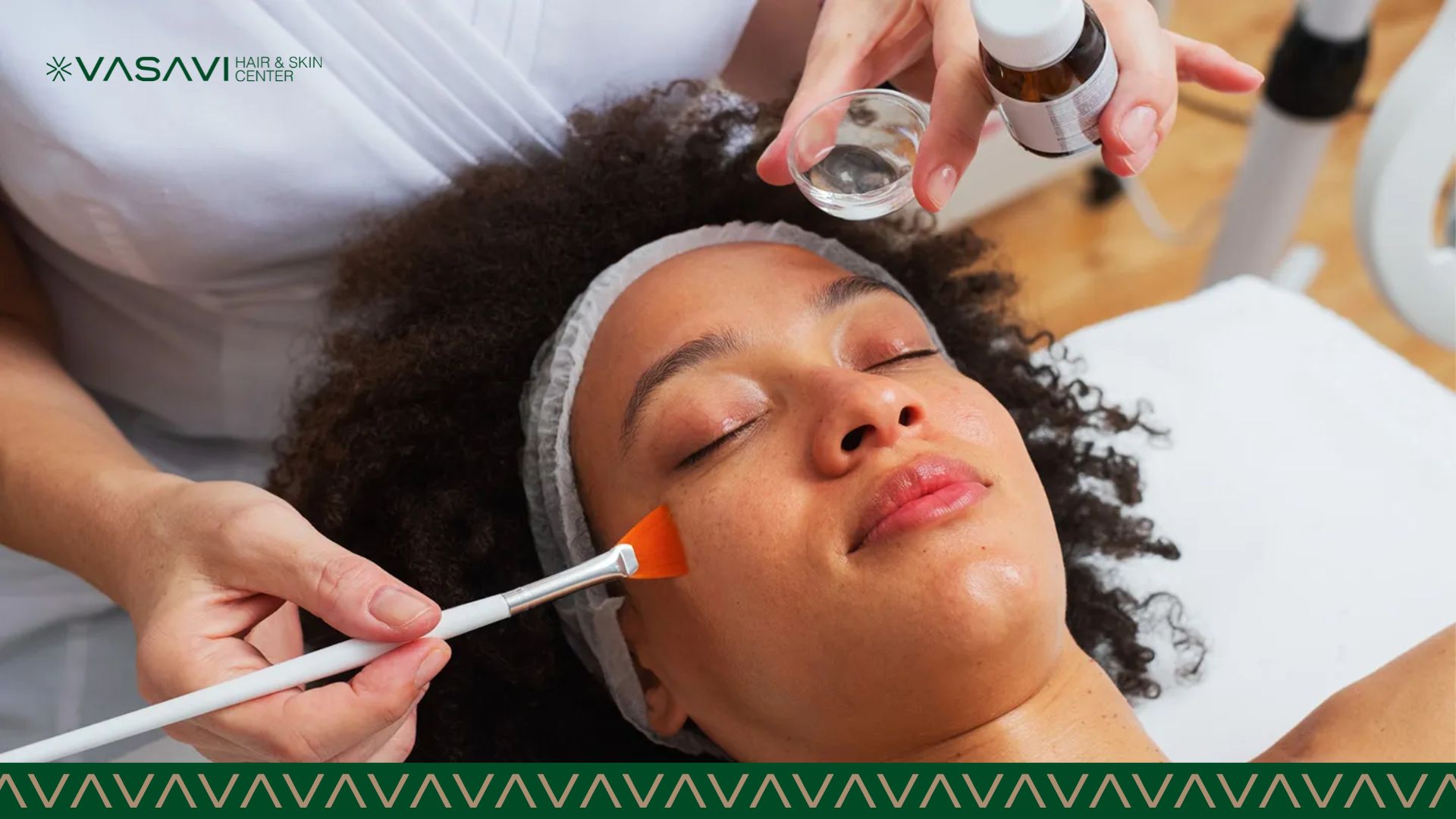
Want to hit the reset button on your skin? Chemical peels might be exactly what you need.
They’re one of the most effective treatments for acne scars, pigmentation, dullness, fine lines, and uneven texture. And despite the slightly scary name, they’re safer and more customizable than ever.
But with different types, strengths, and applications, it’s easy to feel overwhelmed. Let’s break it all down.
What is a Chemical Peel?
A chemical peel uses acids to exfoliate the top layers of your skin, removing dead cells, unclogging pores, and triggering your skin’s natural healing process.
Think of it like shedding an old, damaged layer to reveal fresh, healthy skin underneath.
What it treats:
- Acne and acne scars
- Pigmentation and dark spots
- Fine lines and wrinkles
- Dull, uneven skin tone
- Sun damage
- Large pores
- Rough texture
How Chemical Peels Work

Your skin constantly sheds dead cells, but sometimes this process slows down (due to age, sun damage, or skin conditions). Dead cells pile up, clogging pores and making your skin look dull.
Chemical peels speed up this process by dissolving the bonds between dead skin cells, forcing them to shed faster.
This triggers:
- Increased cell turnover
- Collagen production
- Even pigment distribution
- Reduced inflammation
The result? Clearer, smoother, more radiant skin.
Types of Chemical Peels
Peels are categorized by depth: how deep they penetrate your skin.
Superficial (Light) Peels
Penetration: Outermost layer (epidermis only)
Acids Used: Glycolic acid, lactic acid, salicylic acid, mandelic acid
Downtime: Minimal to none (mild flaking for 2-3 days)
Frequency: Every 2-4 weeks
Best For: Mild acne, dullness, light pigmentation, maintenance
Experience:
Mild tingling during application. Slight redness after. You can go about your day normally.
Medium Peels
Penetration: Deeper into epidermis, reaches upper dermis
Acids Used: TCA (trichloroacetic acid), combination peels
Downtime: 5-7 days of noticeable peeling
Frequency: Every 3-6 months
Best For: Moderate acne scars, significant pigmentation, fine lines
Experience:
Stinging sensation during treatment. Redness and peeling for about a week. Worth it for dramatic results.
Deep Peels
Penetration: Deep dermis
Acids Used: High-concentration TCA, phenol
Downtime: 10-14 days
Frequency: Once, rarely repeated
Best For: Deep wrinkles, severe sun damage, significant scarring
Experience:
More intensive. Usually requires sedation. Significant recovery period but long-lasting results.
Note: Deep peels are less common now. Most concerns can be addressed with a series of medium peels.
Common Peel Acids and What They Do
Glycolic Acid (AHA)
- Derived from sugar cane
- Smallest molecular size = deepest penetration
- Brightens, evens tone, boosts collagen
- Great for anti-aging and dullness
Salicylic Acid (BHA)
- Oil-soluble (penetrates pores!)
- Perfect for acne-prone, oily skin
- Unclogs pores, reduces inflammation
- Treats blackheads and whiteheads
Lactic Acid (AHA)
- Derived from milk
- Gentler than glycolic
- Hydrating and brightening
- Good for sensitive skin
Mandelic Acid (AHA)
- Largest molecular size = gentlest
- Antibacterial properties
- Safe for darker skin tones
- Good for sensitive, acne-prone skin
TCA (Trichloroacetic Acid)
- Medium to deep penetration
- Treats pigmentation, scars, wrinkles
- More aggressive but effective
Jessner’s Peel
- Combination of salicylic, lactic, resorcinol
- Versatile for multiple concerns
- Moderate peeling
What to Expect During Treatment
Before:
Your skin is cleansed thoroughly. A degreasing solution removes oils so the peel can penetrate evenly.
They might apply a numbing cream for medium peels.
During:
The peel solution is applied with a brush or cotton pad. You’ll feel tingling, warmth, or mild stinging (intensity depends on peel strength).
The peel stays on for a specific time (30 seconds to 10 minutes), then is neutralized or left to self-neutralize.
After:
Your skin might look red immediately. Over the next few days, peeling begins.
What Happens After a Peel
Day 1-2:
Skin feels tight. Looks red/pink. Might feel sensitive.
Day 3-5:
Peeling begins. Skin starts flaking off in sheets (superficial/medium peels). Don’t pick!
Day 6-7:
Most peeling complete. Fresh skin revealed.
Week 2+:
Skin continues improving. Brighter, smoother, more even.
Important: For light peels, you might not see dramatic peeling—just slight flaking. That’s normal!
Benefits of Chemical Peels
For Acne:
Unclogs pores, reduces breakouts, treats acne scars
For Pigmentation:
Fades dark spots, melasma, sun damage
For Anti-Aging:
Reduces fine lines, stimulates collagen, improves texture
For Dull Skin:
Instant glow and brightness
For Texture:
Smooths rough, uneven skin
Are Chemical Peels Safe for Indian Skin?
Yes, when done correctly!
Indian skin has higher melanin content, making it more prone to post-inflammatory hyperpigmentation (PIH). But that doesn’t mean peels are off-limits—it just means choosing the right type and strength is crucial.
Best bets for Indian skin:
- Mandelic acid peels (gentle, safe)
- Low-concentration glycolic or lactic acid
- Salicylic acid peels (great for acne)
- Customized combination peels
What to avoid:
- Very aggressive peels without proper prep
- Skipping sun protection after treatment
A skilled dermatologist will adjust peel strength and prep your skin properly to minimize PIH risk.
Who Should NOT Get Chemical Peels
1. Active skin infections or open wounds
2. Recent facial surgeries or procedures
3. Pregnant or breastfeeding
4. Currently on isotretinoin (Accutane) – wait 6 months
5. History of keloid scarring
6. Sunburned skin
7. Recently waxed areas
Pre-Peel Preparation
2 Weeks Before:
- Stop retinoids and exfoliants
- Avoid waxing, threading, laser
- Use sunscreen religiously
- Stay out of sun
Day Before:
- No harsh products
- Keep skin hydrated
Your dermatologist might prescribe a pre-peel kit (usually a mild acid cleanser or cream) to prep your skin.
Post-Peel Care
Do:
- Moisturize generously (gentle, fragrance-free)
- Use SPF 50+ sunscreen daily
- Let skin peel naturally
- Stay hydrated
Don’t:
- Pick or peel skin manually
- Use harsh products or actives
- Go in direct sun
- Exercise intensely (first 48 hours)
- Wear makeup (first 24 hours for light peels, longer for medium)
How Often Can You Get Peels?
Superficial Peels:
Every 2-4 weeks until you achieve desired results, then maintenance every 1-2 months.
Medium Peels:
Every 3-6 months, depending on skin condition.
Deep Peels:
Usually once. Rarely repeated.
Combining Peels with Other Treatments
Chemical peels work great with:
Microneedling
Alternate treatments (not on the same day). Both boost collagen.
Laser Treatments
Can be combined for comprehensive skin renewal (timing is key).
PRP Therapy
Enhances healing and results.
Home Skincare
Retinoids, vitamin C, niacinamide can enhance and maintain peel results (introduce gradually after recovery).
Peels vs Other Treatments
Peels vs Microneedling:
- Peels: Better for surface issues (pigmentation, texture)
- Microneedling: Better for scars and deep texture
Peels vs Laser:
- Peels: More affordable, good for mild-moderate concerns
- Laser: More precise, better for deep scarring
Peels vs Facials:
- Facials: Maintenance, relaxation
- Peels: Active treatment for specific concerns
Results: What’s Realistic?
After 1 Peel:
Brighter, smoother skin. Mild improvement in pigmentation.
After 3-4 Peels:
Noticeable reduction in acne scars, hyperpigmentation, fine lines.
After 6+ Peels:
Significant transformation. Smooth texture, even tone, reduced scarring.
Peels are cumulative. The more sessions, the better the results.
Common Side Effects
Normal:
- Redness
- Flaking/peeling
- Dryness
- Mild sensitivity
Rare (when done improperly):
- Hyperpigmentation
- Hypopigmentation
- Infection (if aftercare isn’t followed)
Working with an experienced dermatologist minimizes risks.
Ready to Transform Your Skin?
Chemical peels offer powerful results for a wide range of skin concerns. With the right type, proper preparation, and expert care, you can achieve dramatically smoother, brighter, healthier skin. Book Your Chemical Peel Consultation
Frequently Asked Questions
Do chemical peels hurt?
Mild tingling to moderate stinging, depending on strength. Superficial peels are barely uncomfortable. Medium peels have more sensation but it’s manageable.
Can I wear makeup after a peel?
Wait 24 hours for light peels, 7-10 days for medium peels.
Will my skin peel visibly?
Light peels: maybe just slight flaking. Medium peels: yes, noticeable peeling for 5-7 days.
Can I get a peel if I have active acne?
Yes! Peels actually help treat acne. But avoid peels if you have cystic lesions or open wounds.
What if my skin doesn’t peel?
Not all peels cause dramatic visible peeling. The treatment still works beneath the surface.
Can peels remove deep scars?
They significantly improve scars but may not completely remove very deep ones. Multiple sessions help.