
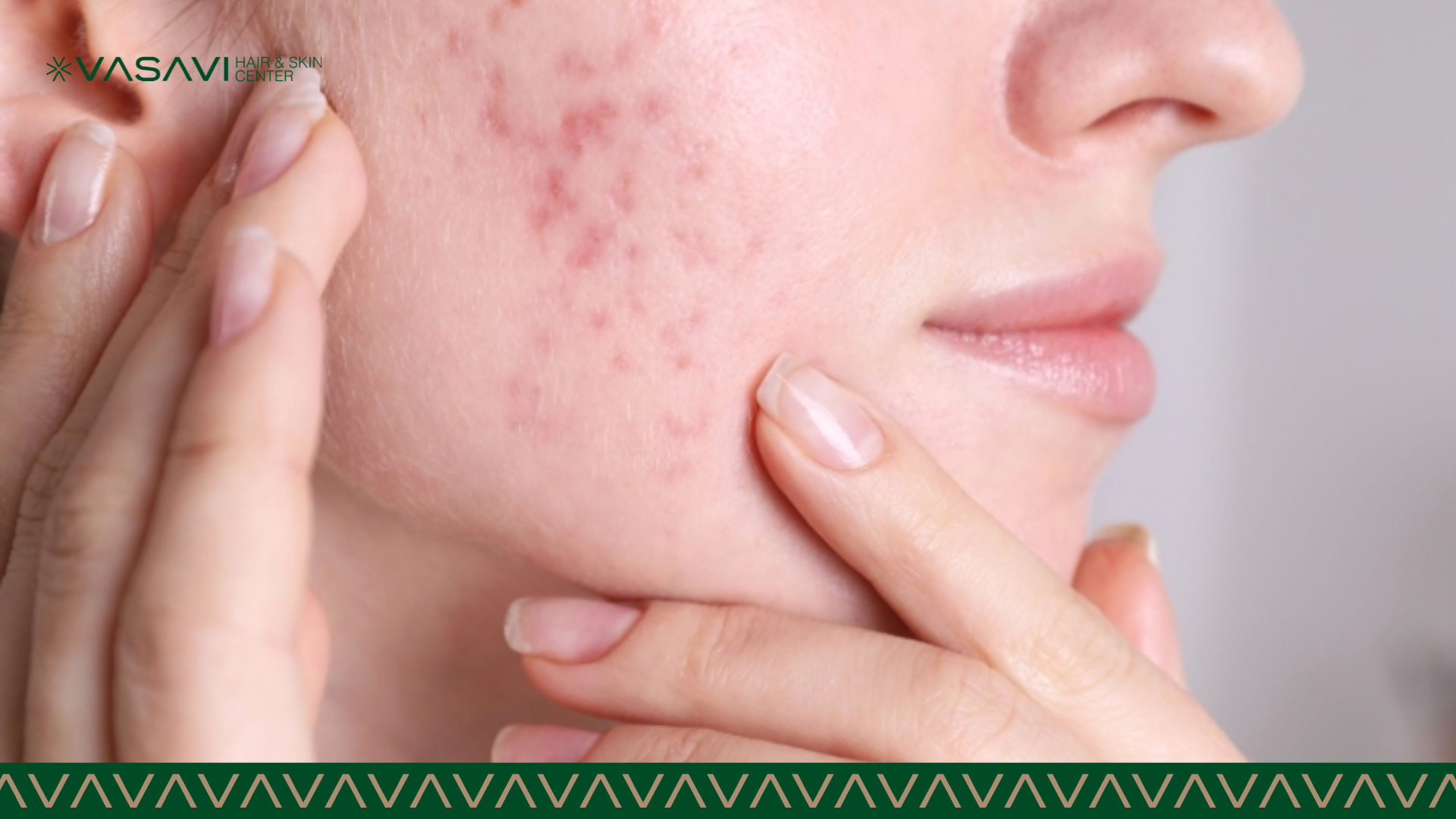
Scars tell stories. But sometimes, you’d rather not have that reminder on your skin.
Whether it’s acne scars from your teenage years, a keloid from an injury, surgical scars, or stretch marks—scars can affect your confidence and how you feel about your appearance.
The good news? Modern dermatology offers incredibly effective treatments to reduce, fade, or even eliminate many types of scars.
Understanding Scars: How They Form
When your skin is injured (acne, cut, burn, surgery), your body repairs the damage with collagen fibers. This repaired tissue is scar tissue—structurally different from normal skin.
Why scars look different:
- Different collagen structure (more rigid, less flexible)
- No hair follicles or sweat glands
- Different pigmentation
- Often raised, depressed, or discolored
Types of Scars
Atrophic Scars (Depressed/Indented)
What they are:
Scars below the skin surface. Loss of tissue during healing.
Subtypes:
Icepick Scars:
Deep, narrow, pinpoint depressions. Hardest to treat. Common from severe acne.
Boxcar Scars:
Round or oval with sharp, defined edges. Shallow to deep. Acne-related.
Rolling Scars:
Wave-like, undulating appearance. Caused by tethering beneath skin surface.
Common causes:
Acne, chickenpox
Hypertrophic Scars
What they are:
Raised, thick scars that stay within the original injury site.
Appearance:
Red or pink, firm, may be itchy.
Common causes:
Piercings, surgeries,minor injuries
Keloid Scars
What they are:
Overgrown scars that extend BEYOND the original injury. Keep growing over time.
Appearance:
Large, raised, shiny, often darker than surrounding skin.
Common areas:
Chest, shoulders, earlobes, jawline
Risk factors:
Genetics (more common in darker skin tones), family history
Contracture Scars
What they are:
Scars from burns that tighten skin, restricting movement.
Serious concern: Can affect muscles and nerves.
Stretch Marks (Striae)
What they are:
Scars from rapid skin stretching (pregnancy, growth spurts, weight gain).
Appearance:
Parallel lines, red/purple initially, fade to white/silver.
Surgical/Trauma Scars
Linear scars from surgeries or injuries. Can be flat, raised, wide, or discolored depending on healing.
What Affects Scar Appearance?
Depth of injury
Deeper = worse scarring
Location
Chest, shoulders, back tend to scar more
Age
Younger skin forms scars more easily
Genetics
Some people scar more than others
Skin color
Darker skin prone to hyperpigmentation and keloids
Wound care
Poor care = worse scarring
Scar Treatment Options
For Atrophic (Acne) Scars
Microneedling with RF (Radiofrequency):
Creates controlled micro-injuries, stimulating collagen. Lifts depressed scars. Requires 3-6 sessions.
Fractional Laser (CO2 or Erbium):
Resurfaces skin, stimulates collagen. Significant improvement for icepick and boxcar scars. Downtime: 5-7 days.
TCA Cross (Chemical Reconstruction):
Applies high-concentration acid directly into icepick scars. Stimulates collagen buildup. Multiple sessions needed.
Subcision:
Breaks up tethering bands beneath rolling scars. Lifts depressed areas. Combined with fillers or microneedling for best results.
Dermal Fillers:
Temporaryplumps atrophic scars (especially rolling and boxcar). Lasts 6-18 months.
Punch Excision/Elevation:
Surgical removal of deep icepick or boxcar scars. Replaces with flat scar or skin graft.
For Hypertrophic and Keloid Scars
Intralesional Corticosteroid Injections:
Flattens raised scars by reducing inflammation. Requires monthly injections for several months.
Laser Therapy (Pulsed Dye Laser, Nd:YAG):
Reduces redness, flattens scar tissue.
Silicone Sheets/Gel:
Applied daily. Hydrates and flattens scars over 3-6 months.
Cryotherapy:
Freezes scar tissue to reduce size. Often combined with steroid injections.
Surgical Excision:
Removes keloid, but high recurrence rate. Usually combined with radiation or steroid injections post-surgery.
Pressure Therapy:
Compression garments for burn scars or large keloids.
For Surgical/Trauma Scars
Laser Resurfacing:
Smooths texture, reduces redness.
Scar Revision Surgery:
Removes scar and closes with meticulous technique for thinner, less noticeable scar.
Dermabrasion/Microdermabrasion:
Mechanically resurfaces skin.
Topical Treatments:
Silicone, vitamin E, onion extract (limited evidence), tretinoin.
For Stretch Marks
Microneedling:
Stimulates collagen, improves texture.
Fractional Laser:
Reduces appearance, improves color.
Tretinoin Cream:
May improve early (red) stretch marks.
Realistic expectation: Stretch marks significantly fade but rarely disappear completely.
Topical Treatments
Silicone Gel/Sheets:
Gold standard for hypertrophic/keloid prevention and treatment.
Vitamin C Serum:
Brightens dark scars (PIH).
Retinoids (Tretinoin, Retinol):
Boost collagen, improve texture, fade pigmentation.
Niacinamide:
Reduces pigmentation.
Alpha Arbutin/Kojic Acid:
Lightens dark scars.
Sunscreen (SPF 50+):
Critical! Sun darkens scars.
Treatment Timelines
Atrophic Scars:
3-6 sessions of microneedling or laser. Improvement visible after 2-3 months. Full results: 6-12 months.
Hypertrophic/Keloid:
Monthly steroid injections for 3-6 months. Laser: 4-6 sessions. Ongoing maintenance may be needed.
Surgical Scars:
Laser: 3-5 sessions. Results improve over 6 months.
Stretch Marks:
4-6 treatments. Modest improvement.
Key: Scar treatment requires patience. No instant fixes.
Prevention: Avoid Scars in the First Place
For Acne:
Treat breakouts early. Don’t pick or pop.
For Injuries:
Clean wounds immediately. Keep moist (Vaseline). Avoid infection.
For Keloids:
Avoid unnecessary piercings/tattoos if prone. Treat injuries aggressively.
Post-Surgery:
Follow wound care instructions. Use silicone sheets. Stay out of sun.
Can Scars Be Removed Completely?
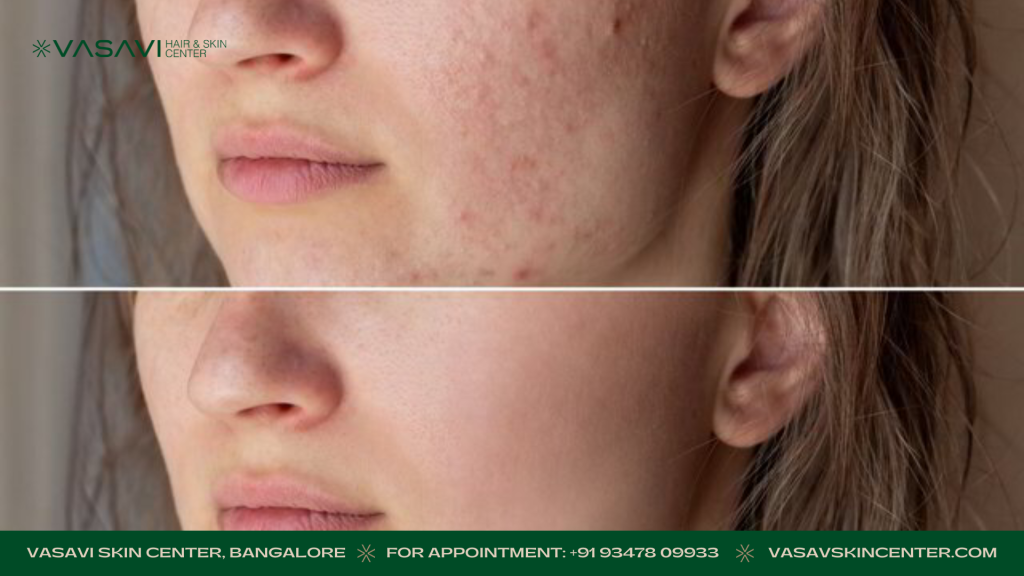
Honest answer: Most scars can be significantly improved (50-90% reduction) but complete removal is rare.
Best results:
- Fresh scars (< 1 year) respond better
- Combination treatments (microneedling + laser + topicals)
- Consistent, long-term care
Realistic goals:
Scars become less noticeable, blend with surrounding skin, improve texture and color.
Scars and Indian Skin
Special considerations:
Post-Inflammatory Hyperpigmentation (PIH):
Dark marks after acne or injury. Very common in Indian skin. Treated with vitamin C, niacinamide, chemical peels.
Keloid Tendency:
Darker skin tones have higher keloid risk. Requires careful treatment planning.
Laser Caution:
Aggressive lasers can worsen pigmentation. Choose experienced dermatologists familiar with Fitzpatrick IV-VI skin.
When to See a Dermatologist
✓ Acne scars affecting confidence
✓ Keloids growing or painful
✓ Surgical scars wider than expected
✓ Scars limiting movement (contractures)
✓ Dark scars not fading
✓ Want professional assessment
Myths About Scar Treatment
Myth: Scars fade completely with time
Truth: Some fade partially. Many remain visible without treatment.
Myth: Vitamin E removes scars
Truth: Limited evidence. May help slightly but not a miracle cure.
Myth: Lemon juice lightens scars
Truth: Can cause burns and worsen pigmentation. Don’t use.
Myth: Only surgeries fix scars
Truth: Non-surgical treatments (lasers, microneedling) are often more effective.
Myth: Dark-skinned people can’t get laser
Truth: Certain lasers (Nd:YAG) are safe for darker skin when used correctly.
Combining Treatments for Best Results
Example: Atrophic Acne Scars
- Subcision (break tethers)
- Microneedling RF (build collagen)
- Fractional laser (resurface)
- Topical retinoid + vitamin C (maintain)
Example: Keloid
- Steroid injections (flatten)
- Pulsed dye laser (reduce redness)
- Silicone gel (prevent regrowth)
Realistic Expectations
Improvement, not perfection.
Even the best treatments can’t make your skin look like scars never happened. But they can make them significantly less noticeable.
Patience required.
Results take months, not days.
Maintenance may be needed.
Some treatments (fillers, keloid injections) require periodic touch-ups.
Ready to Improve Your Scars?
Whether it’s acne scars from years ago or a recent injury, modern scar treatments can make a real difference. Book Your Scar Treatment Consultation
Frequently Asked Questions
Can acne scars be removed completely?
Most can be improved 50-90%. Complete removal is rare but significant improvement is very possible.
How long does scar treatment take?
3-12 months depending on scar type and treatment method.
Do keloids come back after treatment?
They can. Ongoing maintenance (silicone, occasional steroid injections) helps prevent recurrence.
Is laser safe for Indian skin?
Yes, when done by experienced dermatologists using appropriate lasers (Nd:YAG).
What’s the best treatment for deep acne scars?
Combination of subcision, microneedling RF, and fractional laser.
Can I treat scars at home?
Mild scars: topical retinoids, vitamin C, sunscreen. Significant scars: professional treatment needed.