
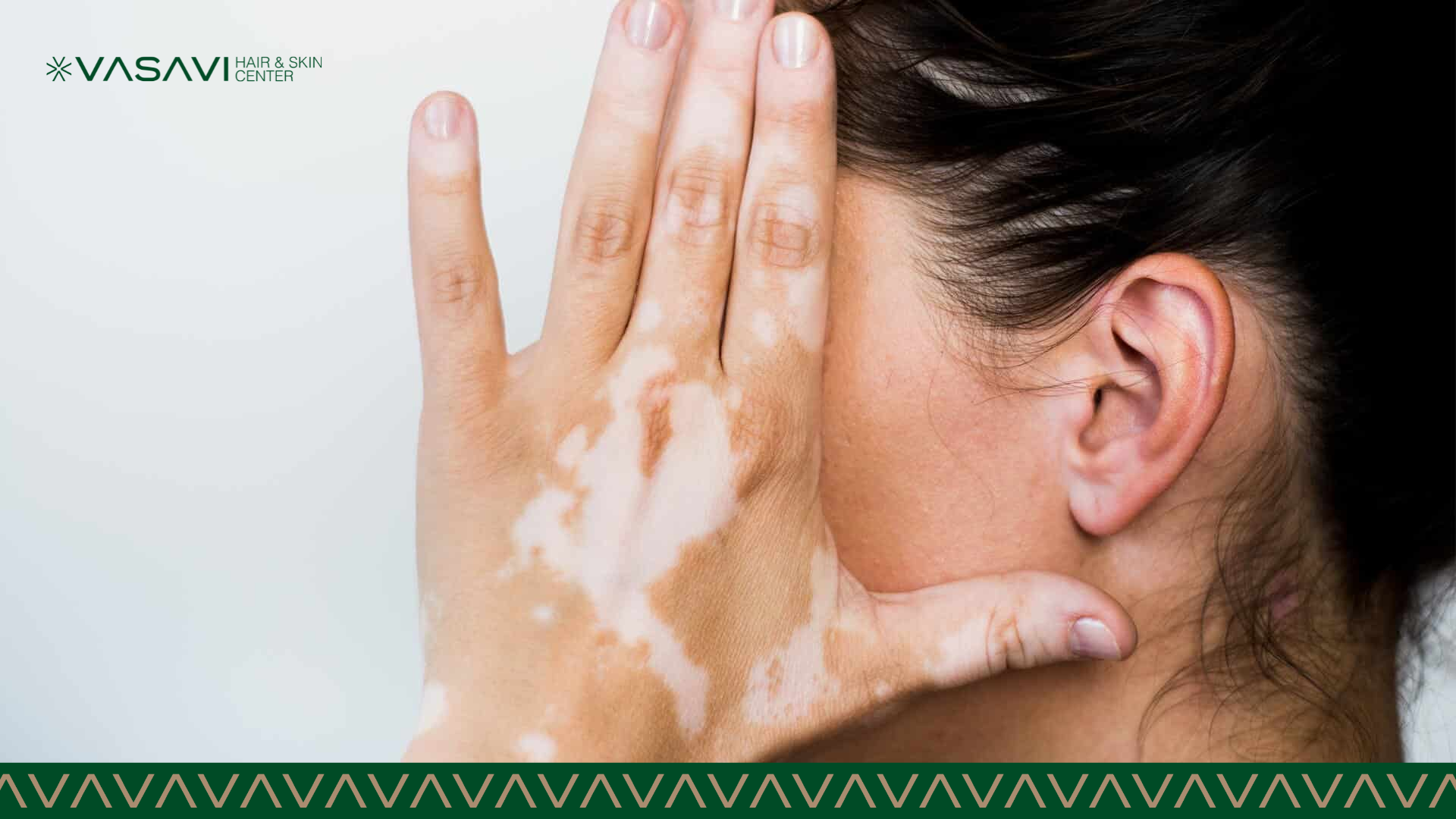
White patches appearing on your skin. Spreading slowly. Affecting your hands, face, or other visible areas.
If this sounds familiar, you might have vitiligo—a skin condition that causes loss of pigmentation.
Vitiligo isn’t contagious. It’s not life-threatening. But it can significantly impact confidence and self-image, especially when patches appear on highly visible areas.
The good news? Modern treatments can help restore pigmentation or manage the condition effectively. Let’s talk about what vitiligo is and what you can do about it.
What is Vitiligo?
Vitiligo is an autoimmune condition where melanocytes (pigment-producing cells) are destroyed, leaving white patches on the skin.
Key facts:
- Affects 1-2% of the global population
- Can develop at any age (most commonly 10-30 years)
- Affects all skin tones but more noticeable on darker skin
- Not contagious or dangerous
- No pain or physical symptoms (purely cosmetic)
What Causes Vitiligo?
The exact cause isn’t fully understood, but several factors play a role:
Autoimmune Response
Your immune system mistakenly attacks and destroys melanocytes.
Genetics
About 30% of people with vitiligo have a family history. Not guaranteed to inherit, but there’s increased risk.
Triggers
- Sunburn or skin trauma
- Severe stress or emotional trauma
- Exposure to certain chemicals
- Hormonal changes
Associated Conditions:
People with vitiligo have higher rates of:
- Thyroid disorders
- Type 1 diabetes
- Alopecia areata (patchy hair loss)
- Pernicious anemia
Types of Vitiligo
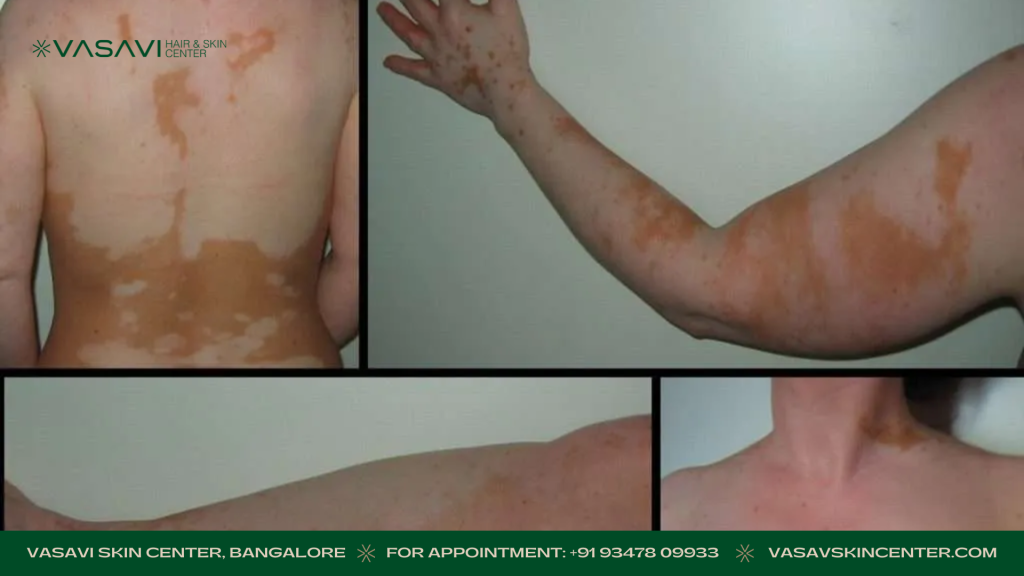
Generalized Vitiligo (Most Common)
Patches appear symmetrically on both sides of the body. Can spread over time.
Segmental Vitiligo
Affects only one side or area of the body. Often appears earlier in life and tends to stop spreading after 1-2 years.
Focal Vitiligo
One or few patches in a limited area. May or may not spread.
Acrofacial Vitiligo
Affects face, hands, feet, and around body openings.
Universal Vitiligo (Rare)
Nearly total loss of pigmentation (covers 80%+ of body).
Common Affected Areas
Most frequent:
- Hands and fingers
- Face (around eyes, mouth, nose)
- Feet
- Elbows and knees
- Genitals
Also possible:
- Scalp (causing white hair)
- Inside the mouth
- Armpits
- Groin
How Vitiligo Progresses
Pattern varies:
Some people develop a few patches that remain stable for years. Others experience rapid spreading.
Unpredictable:
There’s no way to predict who will have limited vs extensive vitiligo.
Koebner Phenomenon:
New patches can appear at sites of injury or trauma (cuts, burns, friction).
Diagnosis
Clinical Examination:
Dermatologist examines patches under special UV light (Wood’s lamp) which makes depigmentation more visible.
Medical History:
Family history, associated conditions, triggers.
Blood Tests:
Check thyroid function, vitamin B12, blood sugar (to rule out related conditions).
Biopsy (Rare):
Only if diagnosis is unclear.
Treatment Options
There’s no “cure,” but treatments can:
- Stop or slow progression
- Restore pigmentation
- Even out skin tone
Topical Medications
Corticosteroid Creams:
Reduce inflammation, may help restore pigment. Best for early, limited patches.
Calcineurin Inhibitors (Tacrolimus, Pimecrolimus):
Non-steroid option. Good for sensitive areas like face.
Combination Creams:
May include steroids + vitamin D analogs.
Phototherapy
Narrowband UVB (NB-UVB):
Most effective treatment for widespread vitiligo. Ultraviolet light stimulates remaining melanocytes. Requires 2-3 sessions per week for months.
Results: 50-75% of people see repigmentation. Face responds best. Hands and feet are stubborn.
PUVA (Psoralen + UVA):
Less common now. Involves taking medication before UV exposure.
Excimer Laser:
Targeted UVB light for small, localized patches. Fewer sessions needed than full-body phototherapy.
Oral Medications
Corticosteroids (Short-term):
Can halt rapid progression. Not for long-term use due to side effects.
Immunosuppressants:
For stubborn cases. Requires monitoring.
JAK Inhibitors (Newer):
Emerging treatment showing promise in clinical trials.
Surgical Options
For stable, localized vitiligo (not spreading for 1+ years):
Skin Grafting:
Transplant pigmented skin from another area to vitiligo patches.
Melanocyte Transplantation:
Extract melanocytes from pigmented skin, grow them, and transplant to affected areas.
Micropigmentation (Tattooing):
Implant pigment to match surrounding skin. Works for small areas (lips, edges of patches).
Depigmentation
For extensive vitiligo (>50% of body):
Instead of repigmenting white patches, depigment remaining normal skin to create uniform color.
Method: Topical cream (monobenzyl ether of hydroquinone)
Permanent and irreversible. Rare choice but offers uniform skin tone.
Lifestyle and Home Care
Sun Protection (Critical):
Vitiligo patches have zero melanin = zero natural sun protection. Burn extremely easily.
- SPF 50+ broad-spectrum sunscreen
- Reapply every 2 hours
- Protective clothing, hats, and seek shade
Cover-Up Options:
- Self-tanners
- Camouflage makeup (Dermablend, Cover FX)
- Waterproof concealers
Stress Management:
Stress can trigger or worsen vitiligo. Practice relaxation techniques.
Avoid Trauma:
Minimize cuts, burns, tight clothing (Koebner phenomenon).
Supplements and Diet
While diet alone won’t cure vitiligo, some nutrients may support skin health:
Folic Acid + Vitamin B12 + Sun Exposure:
Some studies show this combo may help repigmentation.
Antioxidants:
Foods rich in antioxidants (berries, green tea, nuts) support overall skin health.
Vitamin D:
Important for immune function and skin health.
Ginkgo Biloba:
Some studies suggest it may slow vitiligo progression (consult doctor first).
Note: Always discuss supplements with your dermatologist.
Emotional and Psychological Impact
Vitiligo doesn’t hurt physically, but it can affect mental health:
Common feelings:
- Self-consciousness
- Anxiety in social situations
- Depression
- Low self-esteem
Support strategies:
- Connect with vitiligo support groups
- Therapy or counseling
- Education and awareness
Remember: You’re not alone. Many successful people (models, actors, athletes) have vitiligo and embrace it.
Children with Vitiligo
Special considerations:
- Higher chance of associated autoimmune conditions
- Psychological support is crucial
- Phototherapy is safe for children
- Early treatment may improve outcomes
Can Vitiligo Be Prevented?
Unfortunately, no. Since it’s autoimmune and partially genetic, there’s no prevention.
But you can:
- Avoid skin trauma
- Manage stress
- Protect skin from sun
- Treat early for best results
When to See a Dermatologist
✓ New white patches appearing
✓ Patches spreading rapidly
✓ Family history of autoimmune conditions
✓ Want to explore treatment options
✓ Emotional impact affecting quality of life
Early intervention often leads to better treatment outcomes.
Myths About Vitiligo
Myth: Vitiligo is contagious
Truth: Absolutely not. It’s autoimmune, not infectious.
Myth: Only certain foods cause it
Truth: Diet doesn’t cause vitiligo.
Myth: It’s just cosmetic, not a real medical condition
Truth: Vitiligo is a genuine autoimmune disorder with psychological impacts.
Myth: Nothing can be done
Truth: Many effective treatments exist.
Myth: It only affects dark skin
Truth: All skin tones can develop vitiligo.
Living with Vitiligo
Acceptance options:
- Embrace your unique skin (many do!)
- Use makeup/concealers when desired
- Pursue treatment
- Join advocacy and awareness movements
Famous people with vitiligo:
Winnie Harlow (model), Michael Jackson, Jon Hamm, and many others.
Treatment Timeline
Realistic expectations:
- First signs of repigmentation: 3-6 months
- Significant improvement: 6-12 months
- Maximum results: 1-2 years
Vitiligo treatment requires patience.
Ready to Explore Treatment Options?
Vitiligo doesn’t have to define you. With modern treatments and support, you can manage the condition effectively. Book Your Vitiligo Consultation
Frequently Asked Questions
Is vitiligo curable?
There’s no permanent cure, but treatments can restore pigmentation and stop progression for many people.
Will my vitiligo spread?
It varies. Some remain stable, others spread. Early treatment can help.
Can I go in the sun?
Yes, but with SPF 50+ sunscreen. Vitiligo patches burn easily.
How long does treatment take?
3-6 months minimum for visible results. Full repigmentation takes 1-2 years.
Is phototherapy safe?
Yes, when done under medical supervision. Some increased skin cancer risk with long-term use, but benefits often outweigh risks.
Can vitiligo come back after treatment?
Yes, it can recur. Maintenance treatments may be needed.