

Seeing a white patch on your skin can feel worrying.
The first thought many people get is vitiligo.
But all white patches are not vitiligo.
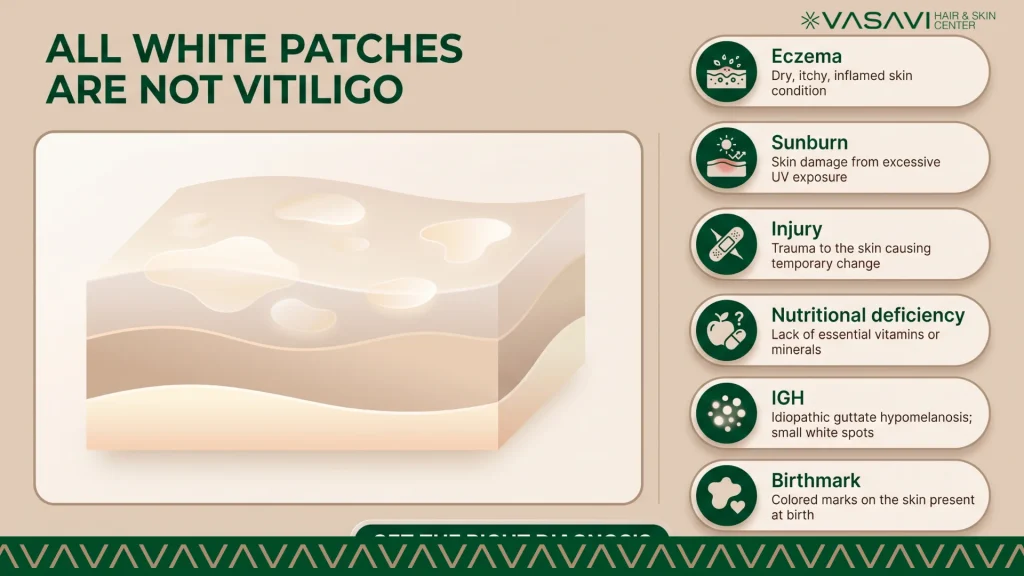
Some white or pale patches can happen after eczema, sunburn, injury, skin inflammation, nutritional issues, idiopathic guttate hypomelanosis, or a birthmark. Vitiligo is only one possible reason.
So the first step is not panic.
The first step is diagnosis.
If you notice a new white patch, changing patch, or patch that is spreading, book an appointment with a dermatologist and get it checked properly.
Quick Answer
No, all white patches are not vitiligo.
White or pale patches on skin can have many causes. Some are temporary. Some are related to previous inflammation. Some are sun-related. Some are birthmarks. Some may be vitiligo.
A dermatologist can examine the patch, understand your history, and suggest the right diagnosis and care plan.
Common Reasons For White Or Pale Patches
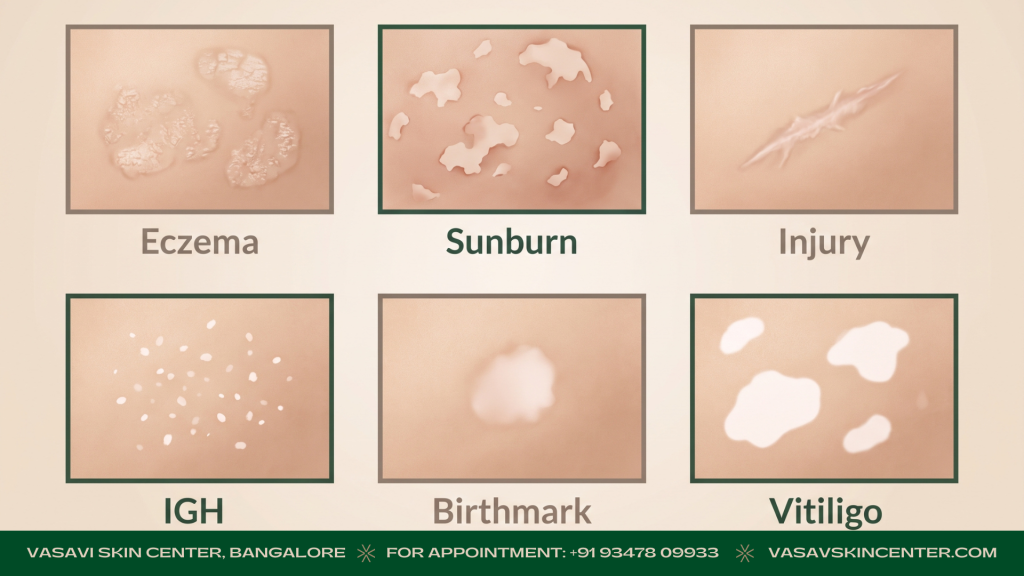
White patches are not all the same.
The shape, border, location, history, itching, scaling, spread, and skin type all matter.
Eczema-Related Pale Patches
After eczema or dry skin irritation, the skin may sometimes look lighter than the surrounding skin.
This can be more noticeable in Indian skin tones because the contrast is clearer.
Some people also get mild scaling or dryness along with the pale patch.
If eczema is part of the problem, treating the irritation and repairing the skin barrier may help. You can also read about eczema treatment if dryness, itching, or recurrent rashes are present.
Post-Inflammatory Pigment Loss
Skin color can temporarily change after inflammation.
This may happen after injury, burns, acne, rashes, irritation, allergic reactions, or other skin problems.
In some cases, the patch slowly improves as the skin recovers. In other cases, treatment may be needed depending on the cause.
That is why the story behind the patch matters.
Did it come after itching?
Did it come after sunburn?
Did it appear after an injury?
Was there a rash before the skin became lighter?
These details help your dermatologist understand what is happening.
Idiopathic Guttate Hypomelanosis
Idiopathic guttate hypomelanosis is often seen as small pale or white spots, commonly on sun-exposed areas like forearms or legs.
It is more common with age and sun exposure.
Many people notice it because the spots look lighter than the surrounding skin.
It can look alarming at first, but it is not the same as vitiligo.
Birthmarks And Long-Standing White Patches
Some pale patches are present from childhood or birth.
These may be birthmarks or other stable pigment changes.
If a patch has been present for many years without much change, that history is important. Still, it is better to get a dermatologist opinion if you are unsure.
When It Could Be Vitiligo
Vitiligo is a condition where the skin loses pigment in patches.
The patches may look well-defined and lighter or white compared with surrounding skin. They can occur on different parts of the body and may slowly change over time.
If the patch is spreading, very sharply defined, or appearing in multiple areas, your dermatologist may evaluate for vitiligo and discuss treatment options.
You can learn more about vitiligo treatment in Bangalore.
Why Diagnosis Matters
The treatment for white patches depends on the cause.
A cream that helps eczema-related irritation may not be the right plan for vitiligo.
A sun-related white spot may need a different approach.
A birthmark may not need the same treatment as an active spreading patch.
This is why self-diagnosis can create confusion and stress.
It can also delay the right care.
If pigmentation is part of the concern, you can also explore pigmentation treatment and other skin care treatments.
What Your Dermatologist May Check
During consultation, your dermatologist may ask:
- When did the patch start?
- Is it spreading?
- Is there itching, scaling, pain, or redness?
- Was there eczema, injury, sunburn, or rash before it appeared?
- Is there a family history of vitiligo or other skin conditions?
- Are there similar patches anywhere else?
- Have you used any creams or home remedies?
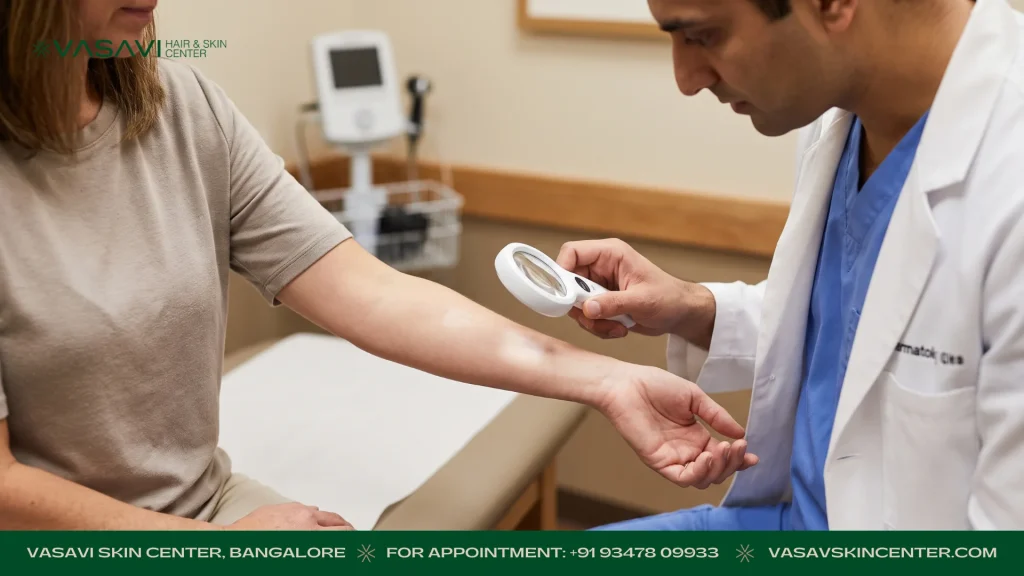
The doctor may examine the skin closely and decide if any further tests or specific treatment are needed.
Do Not Panic When You See A White Patch
It is natural to feel worried.
But stress before diagnosis does not help.
All white patches are not vitiligo.
And even when it is vitiligo, the right dermatologist guidance can help you understand the condition, treatment options, and skin care plan.
The better step is simple:
Do not guess.
Do not start random creams.
Do not hide it out of fear.
Get it checked.
White Patch Diagnosis In Bangalore
If you are looking for a dermatologist for white patches on skin in Bangalore, visit a clinic where your skin is examined properly before any treatment is suggested.
Patients from Thanisandra, Hegde Nagar, and nearby North Bangalore areas can book a consultation for white patches, vitiligo evaluation, pigmentation concerns, eczema-related pigment changes, and other skin conditions.
Clinic address: 439, 1st Floor, Above HDFC bank, 5th Cross, MCECHS Layout, Dr Shivaram Karanth Nagar, Hegde Nagar, Thanisandra, Bengaluru – 560077
Contact Vasavi Skin Center or book an appointment.
Final Answer
All white patches are not vitiligo.
White or pale patches can happen after eczema, sunburn, injury, inflammation, nutritional issues, idiopathic guttate hypomelanosis, birthmarks, vitiligo, or other skin conditions.
Do not panic and do not self-diagnose.
Consult a dermatologist for the right diagnosis and treatment guidance.