
Most of us have done it. A new serum goes viral on Instagram, a friend swears by an acid toner, and soon the bathroom shelf looks like a chemist’s counter. A few weeks later the face is red, stinging and breaking out, and the first instinct is to add one more product to fix it.
If that sounds familiar, the problem may not be your skin type or a missing product. It may be a damaged skin barrier, and it usually needs less from you, not more.

What happens when you use too many products
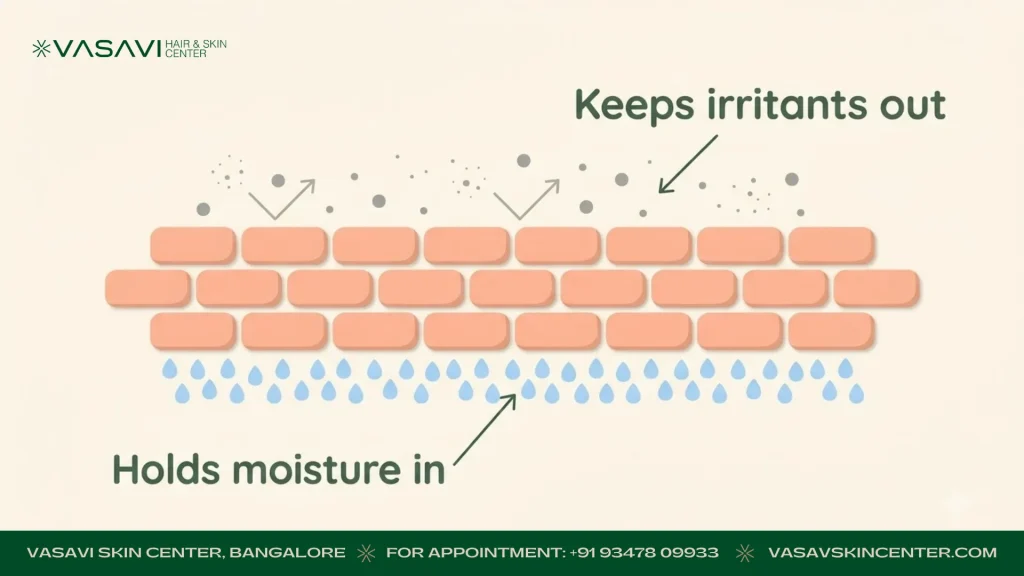
Your skin barrier is the outer layer of your skin. Its job is to hold moisture in and keep irritants, pollution and germs out. When it is working well, your skin feels soft, comfortable and calm.
Active ingredients like retinol, glycolic acid, salicylic acid, vitamin C and benzoyl peroxide can all be useful. The trouble starts when several of them are layered together, used every day, or changed every week because a new video recommended something else. The skin gets overloaded and irritated, and slowly the barrier weakens.
It is easy to assume the burning or breakouts are the skin “adjusting” and carry on. Often the skin is simply telling you it has had enough.
Signs your skin barrier may be damaged
Your skin usually gives clear hints before things get worse. Watch for these:
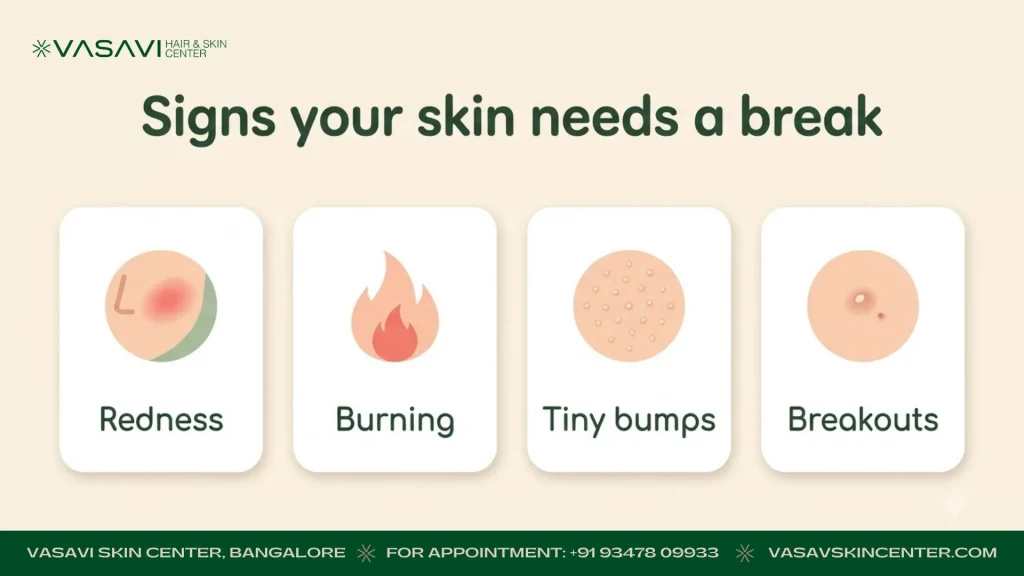
- Sudden redness that was not there earlier
- Burning or stinging when you apply products that never bothered you before
- Tiny bumps or a rough, uneven texture
- Tightness, dryness or flaking
- New breakouts, or breakouts that get worse even though you are using more products
Not every red, bumpy or itchy face means a damaged barrier. Conditions like eczema, rosacea, acne and allergic reactions can look very similar. That is why it is worth having your skin examined if the problem does not settle.
What to do when your skin needs a break
At this stage your skin does not need one more product. It needs a break. A simple routine is usually enough to let it settle:
- Pause the harsh actives for now. That means retinoids, exfoliating acids, scrubs, strong vitamin C and peels.
- Keep to three things: a mild cleanser, a plain moisturizer and a sunscreen.
- Wash with lukewarm water, do not scrub, and pat your face dry instead of rubbing.
- Use sunscreen every morning. Irritated skin reacts more easily to sun, and marks can turn darker. If you already have dark patches, pigmentation can be looked at once the skin has calmed down.
- Skip home remedies like lemon, toothpaste or leftover creams from other people. They tend to irritate further.
Healing takes time. Many people feel their skin getting calmer in a few weeks, but it can take longer depending on how irritated it was.

Bringing products back, slowly
Once your skin feels comfortable again, with no stinging or tightness, you can bring products back one at a time. Start with a single product, use it a couple of times a week, and wait a couple of weeks before adding the next one. Do a patch test first, on the jawline or behind the ear. If it stings or turns red, stop.
Not everyone needs every active. If you use products for acne, dark marks or early signs of ageing, a dermatologist can help you decide what is actually worth keeping and in what order. You can read about our anti-aging treatments or look through all skin care treatments we offer.
When to see a dermatologist
See a doctor if the burning, redness or bumps do not improve after a couple of weeks of stopping the extra products, if breakouts are getting worse, or if your skin keeps reacting to almost everything. Swelling of the face or lips, or trouble breathing after using a product, needs urgent medical care.
Treatment depends on your skin and your concerns, so it is better to be examined than to guess. At Vasavi Hair & Skin Center in Bangalore, Dr. Ch. Sree Vasavi can look at your skin type and suggest a routine that suits you. You can book an appointment or read more skin and hair tips on our Beauty Insights page.
Healthy skin is always better than perfect skin.
How long does it take for a damaged skin barrier to heal?
It depends on how irritated the skin is. Many people notice their skin feeling calmer within a few weeks of stopping harsh products, but it can take longer. If it is not improving, see a dermatologist.
Can I use serums and acids when my skin barrier is damaged?
It is best to pause them until your skin settles. A mild cleanser, a plain moisturizer and sunscreen are usually enough for now. Your dermatologist can tell you which products, if any, to keep.
Is it wrong to follow viral skincare trends?
Watching trends is fine. The problem is copying them all at once. Skin type, concerns and tolerance differ from person to person, so add one new product at a time and stop if your skin reacts.
